 USA + International
 OWC Canda
 OWC Europe
The Dual-Lens, Leica-Badged Insta360 Luna Ultra is Here to Challenge DJI's Grip on the Gimbal Camera Market
Hoping to capitalize on DJI's new product ban in the U.S., the Insta360 Luna Ultra offers a distinctive feature set for those looking for a new gimbal camera.
Wayne Grayson • Jul 02, 2026
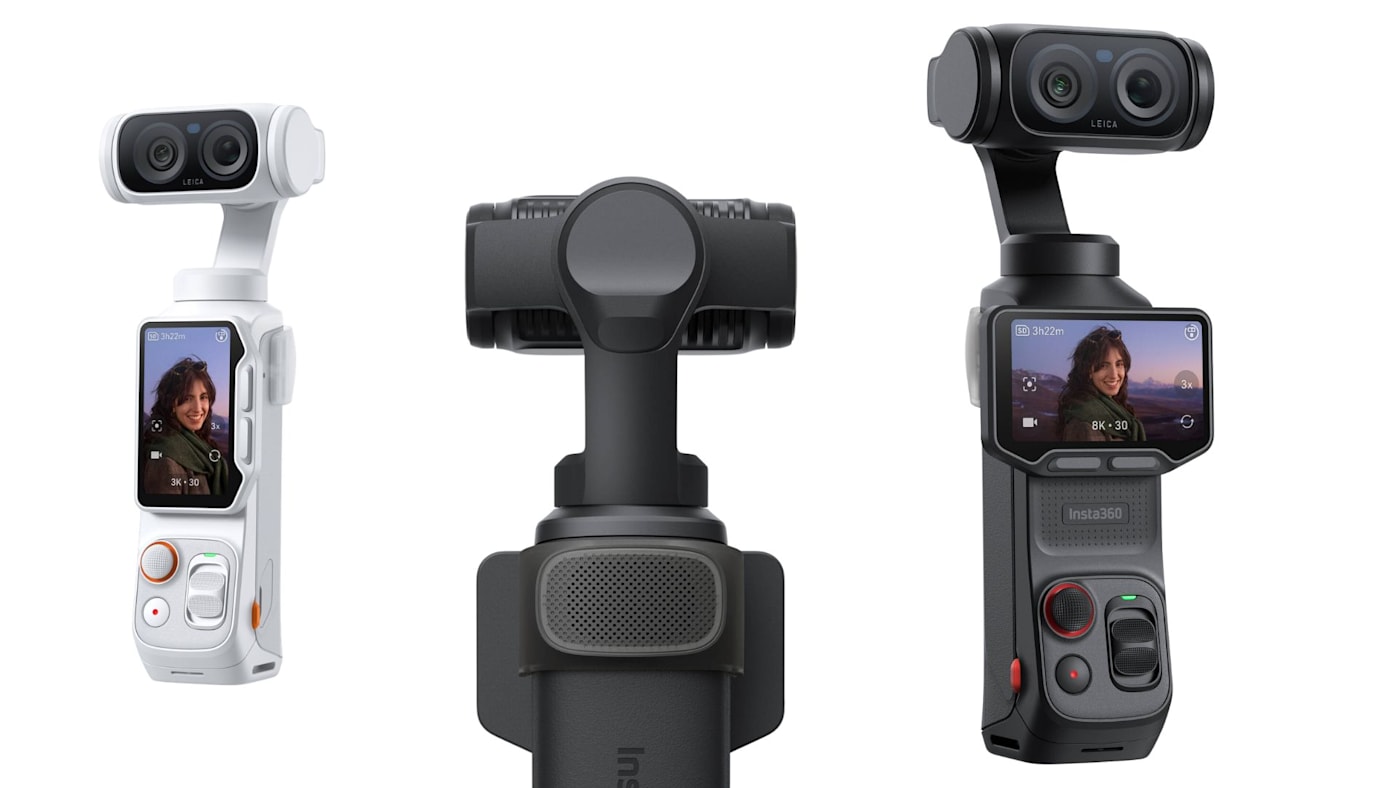
For years, DJI has had the compact gimbal camera category largely to itself. The Osmo Pocket lineup, starting with the original in 2018 and culminating in the recently released Osmo Pocket 4 and new dual-lens Osmo Pocket 4P, built a devoted following among vloggers, travel shooters, and solo content creators and has quickly become one of the best selling cameras in the world, period.
But now DJI is facing a serious challenge — and at the worst possible time.
As DJI faces an effective ban on selling new products in the U.S. thanks to an FCC blacklisting over cited national security concerns, Insta360—DJI’s closest rival in the action cam world — is entering the space with its first gimbal camera: the dual-lens Insta360 Luna Ultra.
A Leica Pocket Cam?
The Luna Ultra didn't come together overnight. According to a PetaPixel report citing Japanese imaging blog DC.Watch, Insta360 founder JK Liu said that development started roughly five years ago, with an initial investment of around $4.4 million. The original concept featured a modular design similar to the Insta360 One R, but thermal management challenges eventually pushed the team toward a more integrated form factor.
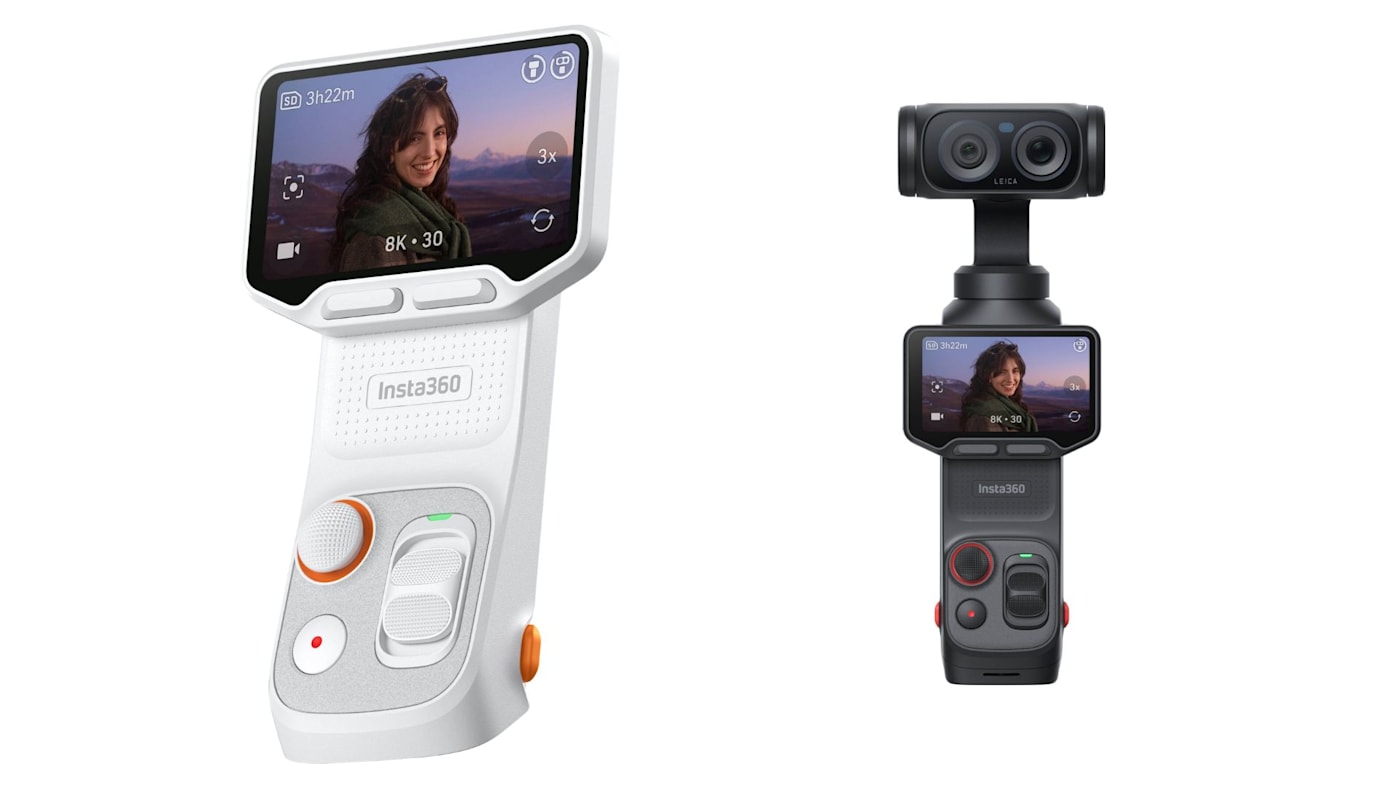
One feature Liu personally championed is its detachable OLED touchscreen controller. Not everyone inside Insta360 was on board as the feature increased both cost and development time. But Liu insisted, and the feature is one of the camera's most compelling differentiators.
Another selling point is the LEICA badge situated between the Luna Ultra’s two lenses. Insta360 and Leica have maintained an active imaging partnership for six years, and for the Luna Ultra, that relationship produced co-engineered lenses, Leica color profiles (Natural, Vivid, and Chrome), Leica's I-Log video profile, and even the prestigious Summicron lens designation.
What the Luna Ultra Can Do
At its core, the Luna Ultra is a dual-lens gimbal camera stabilized by a three-axis mechanical gimbal. The main camera uses a 20mm equivalent Leica Summicron lens with an f/1.8 aperture mounted in front of a large Type 1 (roughly 1-inch) sensor capable of recording up to 8K at 30fps in Dolby Vision. The secondary camera is a 60mm equivalent telephoto with an f/2.0 aperture and a slightly smaller Type 1/1.3 sensor. The telephoto lens is also capable of 8K capture, which is a nice surprise.
For slow motion capture, you're looking at 4K up to 120fps and 1080p up to 240fps. The Luna Ultra also boasts support for 10-bit I-Log with 14 stops of dynamic range. The telephoto system provides up to 6x lossless zoom, with digital zoom extending to 12x. Still shooters get 37-megapixel "UltraPhotos" and 200-megapixel "Scenic Panorama" images. The camera also supports ACES color workflows, built-in timecode, a built-in wind guard for cleaner audio, and magnetic filter and lens accessories including a 108-degree wide-angle option.
But what about that detachable OLED screen? Rated at 1,000 nits with a 20-meter wireless range, it lets you set the camera on a tripod, walk away, see yourself on screen, and control recording — all without having to reach for your phone. The display is small (564 x 318 pixels), so pixel-peeping for critical focus isn't ideal, but for framing and tracking it works well. AI tracking via Deep Track 5.0 handles the rest, with Auto Tracking, Active Zoom Tracking, Group Tracking, and Smart Framing all on board.
Battery life is rated at up to four hours, though real-world testing with heavy 8K and slow-motion use has landed closer to two hours. A fast-charge cycle brings the 1550mAh cell to 80% in about 23 minutes. Built-in storage is 47GB, expandable to 1TB via microSD. The camera is available in Cosmic Black or Stellar White for $769.99.
How the Luna Ultra Compares to DJI's Lineup
Because the Osmo Pocket 3 was such a huge hit but is now showing its age in certain situations, there was a lot of interest in what DJI would deliver in the Osmo Pocket 4. The Osmo Pocket 4 keeps the single-lens formula but pushes performance considerably further: 4K at up to 240fps, 14 stops of dynamic range, and 10-bit D-Log. That 4K/240fps capability is something the Luna Ultra doesn't match (it tops out at 4K/120fps).
But, again, if you’re in the U.S., you can’t currently buy the Osmo Pocket 4 because of the ban we discussed at the top of this article. You also can’t buy the Osmo Pocket 4P, which is the Luna Ultra’s true head-to-head rival.
The Pocket 4P adds a second 60mm f/1.8 telephoto lens on a separate 1/1.28-inch sensor, mirrors the 6x lossless zoom architecture, and boasts 4K at 240fps along with a claimed 17 stops of dynamic range via its D-Log 2 profile. Early footage suggests the Pocket 4P's image quality is extraordinary for a camera this size. On paper, the Pocket 4P pulls ahead in slow-motion and dynamic range. But the Luna Ultra fires back with Leica optics and color science, a detachable screen that can change how you operate the camera as a solo shooter, and broader accessory support.
The good news for those looking to upgrade from an Osmo Pocket 3 is that the Insta360 Luna Ultra looks to be a solid option. For those in the U.S. that need the slightly higher specs of the Osmo Pocket 4P, it’s unclear how long the wait will be before you're actually able to buy one.
Bottom Line
Insta360 has entered the gimbal camera space with a camera that can credibly compete at the top of the category. The Luna Ultra's Leica co-engineering, dual-lens versatility, and detachable touchscreen controller give it a distinct identity. If you're a content creator looking for a compact, high-quality gimbal cam, the competition has never been better. And right now, the Luna Ultra is the one you can actually buy.
The Insta360 Luna Ultra is available now in Cosmic Black and Stellar White for $769.99.
Other topics you might like

Godox's C100 is a Novel Light Meter and Mini Camera With a Transparent Display
Updated on Aug 5, 2026
Peak Design's Field Bracket is a Modular, AirTagged Evolution of the L-Bracket
Updated on Jul 28, 2026
Sony’s New FX5 Brings New Sensor, Open Gate, VENICE-level Features to a Compact Cinema Camera
Updated on Jul 23, 2026
The Best Compact Cinema Camera in 2026: Canon R6V, Canon C50, Nikon ZR, and Sony FX2 Compared
Updated on May 21, 2026