 USA + International
 OWC Canda
 OWC Europe
Sony’s New FX5 Brings New Sensor, Open Gate, VENICE-level Features to a Compact Cinema Camera
The Sony FX5 strikes an interesting balance between compact run-and-gun body and high level cinema features.
Wayne Grayson • Jul 23, 2026
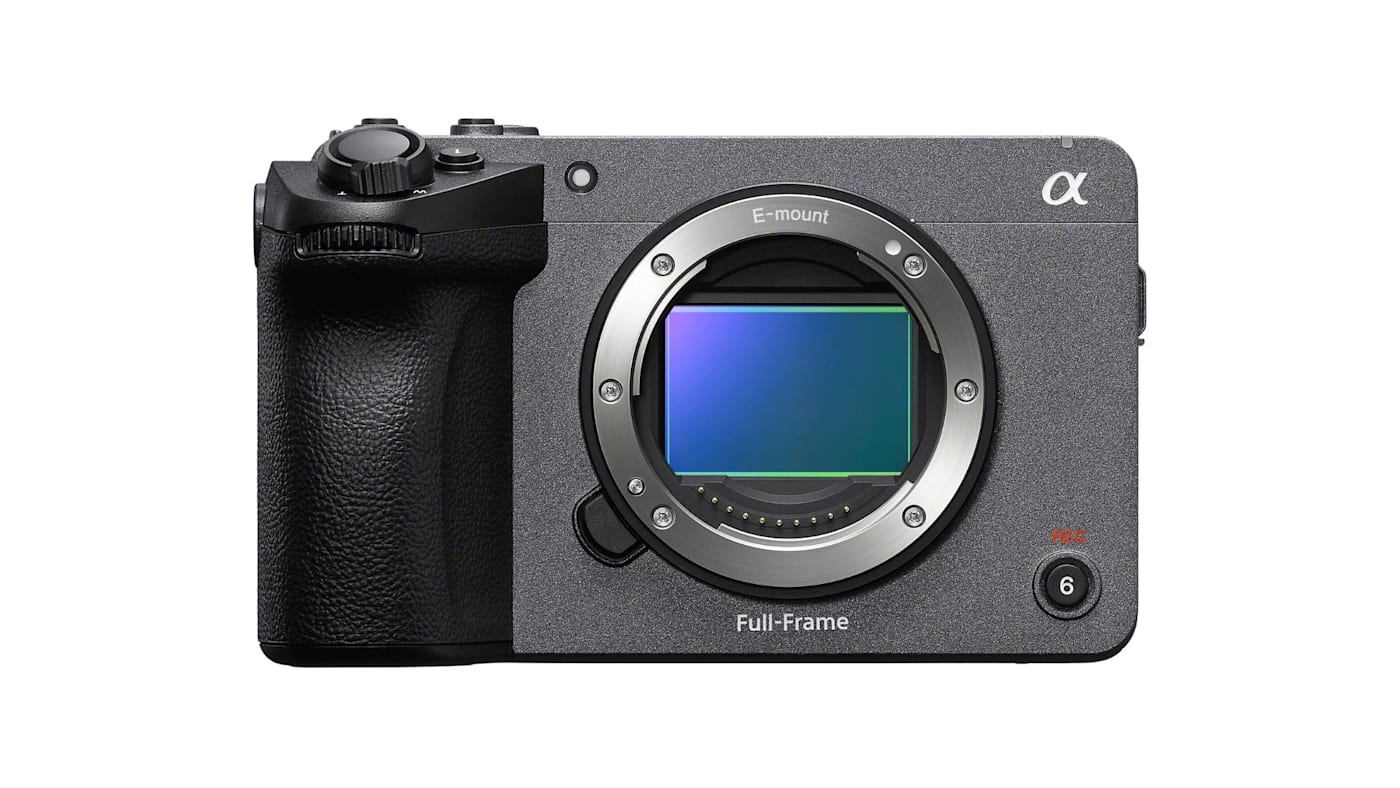
Sony has announced the latest member of its FX Series of cinema cameras, the FX5. This camera is such a massive update to its predecessor, the FX3, and a head-scratchingly compelling alternative to the larger FX6 that it represents a substantial disruption to the Sony Cinema Line in its current form.
Let’s talk about what's new, how the FX5 compares to its two closest siblings, and how the FX5 stacks up to cameras from other brands.
New 16.6 MP Stacked Sensor Unlocks Major New Features
At the center of the FX5 is a newly developed 16.6-megapixel full-frame, fully stacked Exmor RS sensor, a jump up from the 12.1-megapixel sensor shared by the FX3 and FX6. The stacked design and Sony's new BIONZ XR2 processor, which debuted in the a7 V, are responsible for the FX5's biggest upgrades:
- Open Gate recording: Finally! The FX5 is the first FX camera that can use the sensor's full 3:2 area, giving editors more room to reframe and more flexibility in editing for social, while making anamorphic lenses far more practical. In fact, the camera has anamorphic desqueeze.
- Internal RAW: While open gate is going to get most of the buzz, internal RAW is so nice to see on the FX5. The camera records Sony's proprietary X-OCN codec directly to card, a 16-bit RAW format with a claimed 280 trillion colors.
- 5K high frame rate capture: The FX5 records 5K footage up to 60p and can reach 120p at 4.5K. Sony says 4K 240p will arrive via a firmware update planned for 2027.
- Triple base ISO: ISO 800, 4,000, and 12,800 give cleaner results across a wider range of lighting than the FX3 and FX6's dual base ISO.
- Dual Gain shooting: A new mode that gives you the option of trading readout speed for extra dynamic range, pushing past the FX5's already-strong 15-plus stops in S-Log3.
- AI-based subject tracking

Cramming a VENICE Into a Compact Body
Ok, the FX5 isn’t quite as capable as the VENICE 2, but the addition of open gate, internal RAW, and the cine-style menu system go a long way in bridging the gap between Sony’s compact cinema bodies and its flagship motion-picture-level body. The FX5 even features a new multi-function dial that allows you to navigate this pro-level menu system that is heavily inspired by the VENICE.
The FX5 also delivers improved IBIS, more tally lamps, and better autofocusing in low light. Another major design change is the introduction of a new, detachable OLED viewfinder, the DVF-EL1, sold separately. The DVF-EL1 boasts 3.68 million dots and a brightness of 2,500 nits with support for wide color gamut and high frame rates.
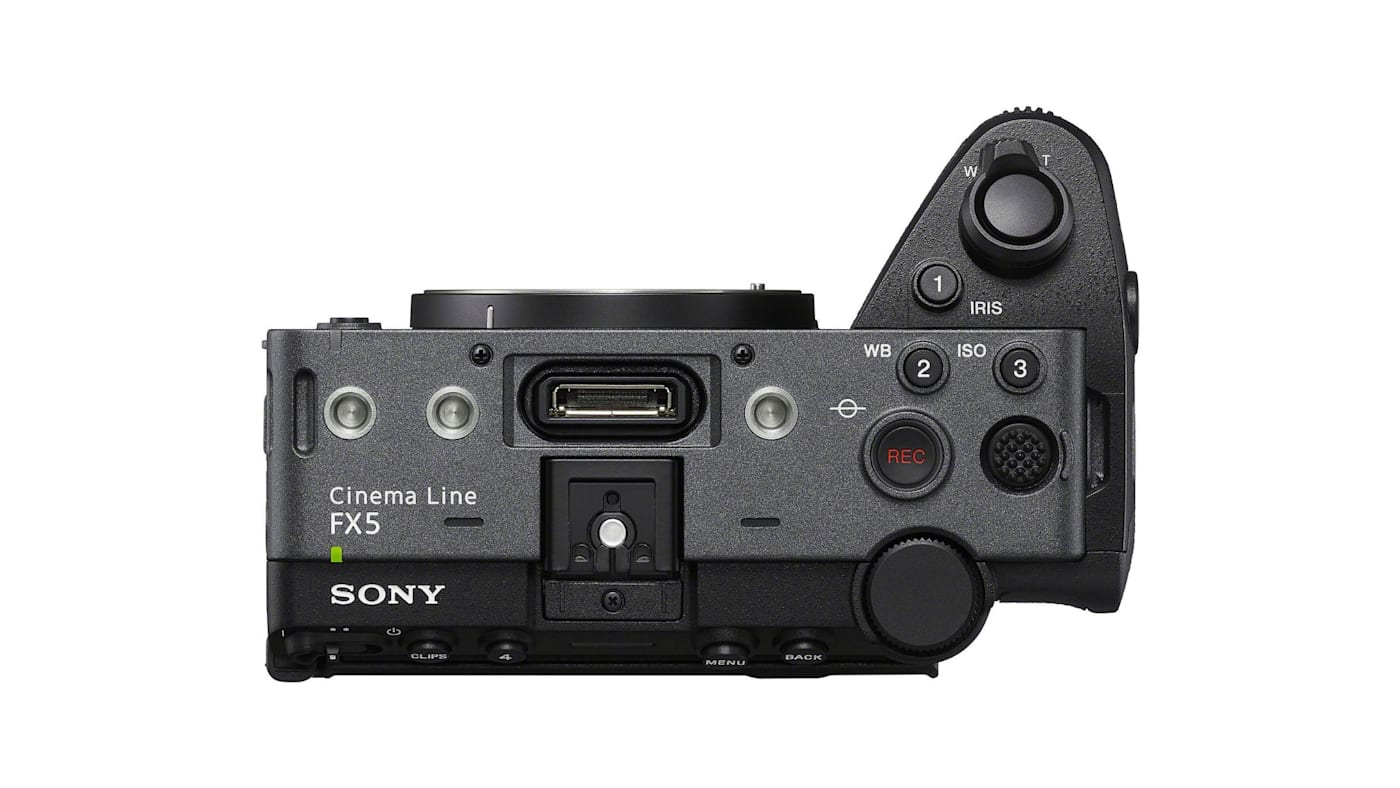
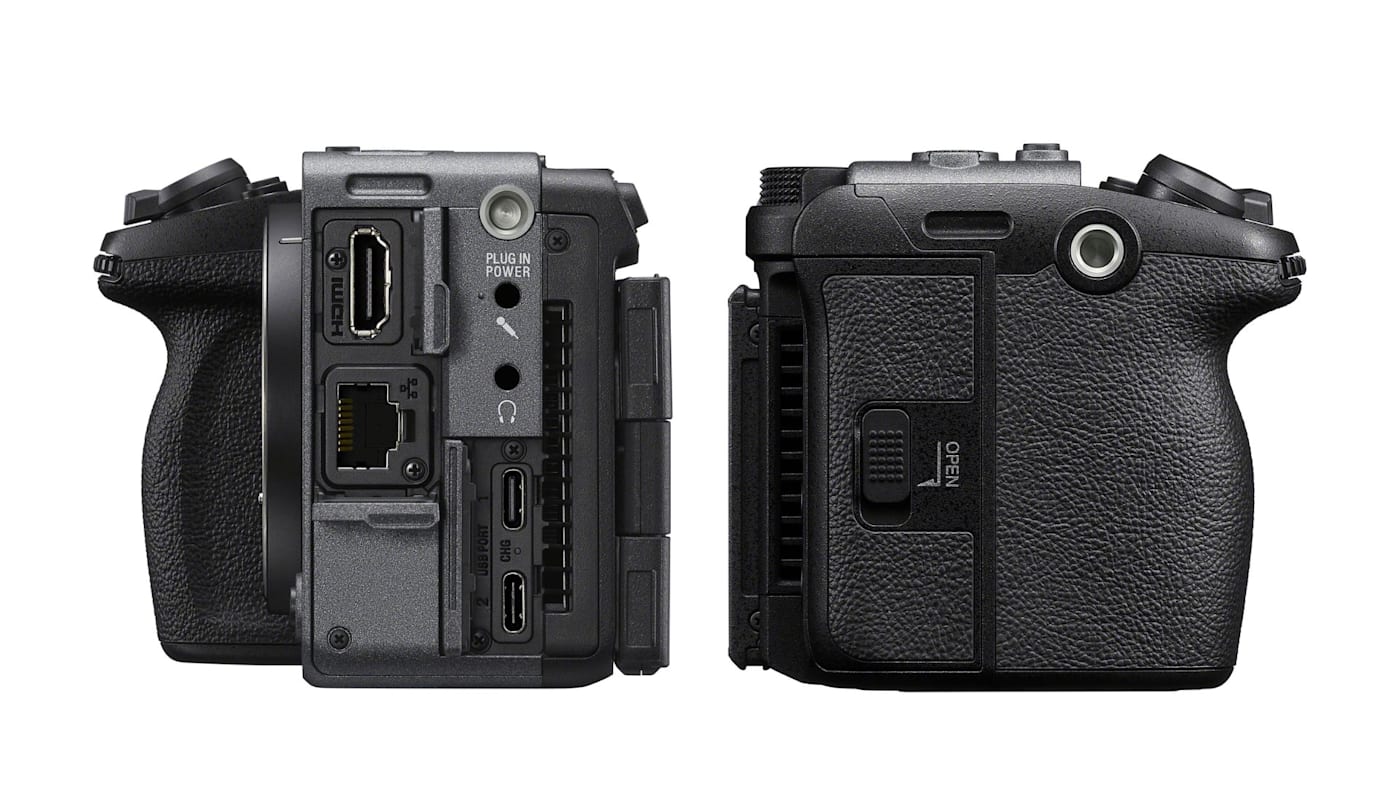
Unfortunately, when attached, the EVF blocks the Multi Interface shoe, meaning shooters who want both the viewfinder and 32-bit float XLR audio through the hot shoe will need to choose one or the other for a given setup. Another bummer is that the XLR handle is also sold separately.
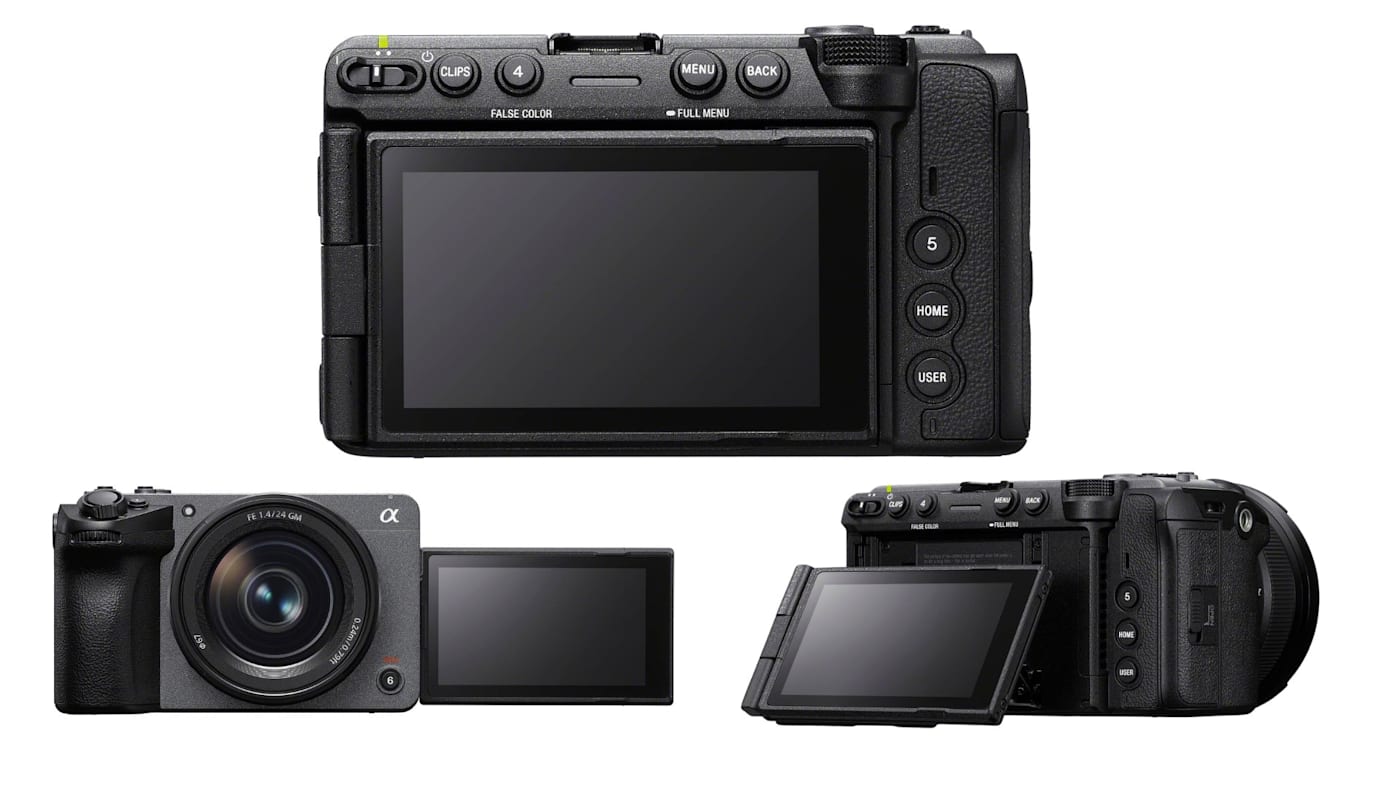
The rear 3.5-inch display is larger than the 3-inch display on the FX3, has 2.76 million dots and is a flippy-articulating hybrid: you can flip the display up or down for top-down or bottom-up viewing, or swing it out and around for monitoring from in front of the lens.
Better than an FX6?
As we’ve established, the FX5 represents a major upgrade over the FX3 largely due to — though not limited to — its new stacked sensor and the BIONZ XR2 processor. And if you look just at the side-by-side specs, you might wonder whether the FX5 has leapfrogged the FX6 as well.
But the truth of the matter is, the FX5 and FX6 remain very different cameras. Yes, the FX5 is more advanced, but the difference between the two still comes down to the differences in form factor: The FX5 is a compact cine cam and the FX6 is not. In addition to having more production-focused ergonomics and port selection, the FX6 also includes a built-in electronic ND filter that the FX5 does not.
Whether or not those differences are compelling to you really comes down to the form factor question. Some FX6 owners may be excited to upgrade their specs while downsizing their rig, but many others will need the larger form factor for the type of work they’re doing. The good news is that based on how substantial the update of the FX5 is over the FX3, we have to image in a successor to the FX6 is also in the works.
How the FX5 Stacks Up to the Competition
The FX5's $4,898 body-only price puts it in a competitive part of the cinema camera market. These are the closest competitors in price and feature set:
RED Komodo-X
This is really the target of the big punches Sony is throwing with the upgrades to the FX5. But while the FX5 targets the Komodo-X by introducing internal 16-bit RAW and a fast stacked sensor, the Komodo-X still retains its crown for a true global shutter and the coveted RED IPP2 color science. However, the FX5 is much more useable out-of-the-box due to its built-in 5-axis image stabilization (IBIS) and best-in-class AI autofocus. And at $7,000, the Komodo-X is well north of the FX5 in terms of price.
Canon C80
At around $5,500, Canon's compact full-frame cinema camera competes with the FX5 directly on size and price, with its own internal RAW Light recording and a more traditional cinema-camera control layout. Another major advantage it enjoys over the FX5 is its built-in motorized physical ND filters. The C80 also includes native professional dual SDI ports, though the FX5 fights back with its superior triple base ISO (800 / 4,000 / 12,800) and lighter profile.
Blackmagic PYXIS 6K
The ~$3,500 PYXIS 6K is a modular, budget-friendly full-frame option with Blackmagic RAW and DaVinci Resolve integration built in, appealing to shooters who want to build out a custom rig. Broadcast-ready ports are there, but it can’t touch the AI-powered autofocus of the FX5 or the Sony’s internal audio capabilities.
Nikon ZR
Nikon's cinema body is one of the FX5's toughest spec-for-spec competitors. Though it’s less than half of the price of the FX5 at $2,200, it records internal 6K REDcode R3D RAW footage natively and matches the FX5's high-speed video capabilities. It doesn’t have the FX5’s nifty detachable EVF port, but it does have a massive and beautiful 4-inch fully articulating rear display. With each passing day, how Nikon packed in this much capability into a $2,200 body becomes more and more amazing.
Handling the Files: Storage Considerations
The FX5’s Open Gate 5K and internal X-OCN RAW both produce demanding file sizes, and Sony requires VPG400-validated cards to guarantee performance in the FX5's dual CFexpress Type A / UHS-II SD slots.
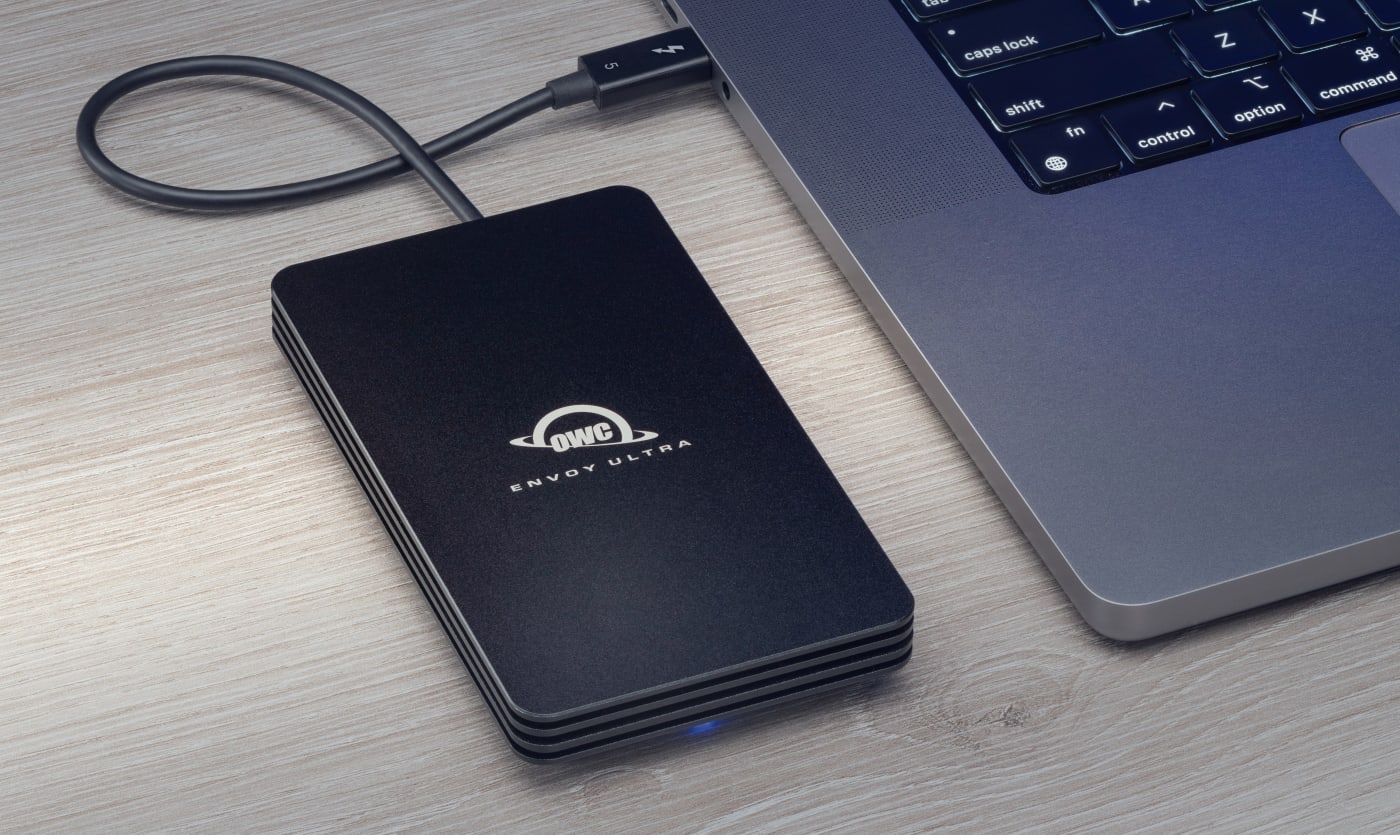
Editors moving X-OCN footage into a post-production workflow will also want fast external storage for offloading, backup, and editing, since RAW files at this bit depth can quickly outgrow a laptop's internal drive. For editing directly from the drive on the go, take a look at OWC’s fast and rugged Thunderbolt 5 Envoy Ultra, and Thunderbolt 3 Envoy Pro FX. Meanwhile, the Express 1M2 80G delivers Thunderbolt 5/USB 4 80G speeds in a DIY-friendly enclosure. For backups, it’s hard to beat the cost effectiveness of HDD RAID enclosures like the OWC ThunderBay 4 and ThunderBay 8.
Pricing and Availability
The Sony FX5 body will be available in mid-August for $4,899.99. A kit that bundles the new XLR-H2 handle unit (ILME-FX5) runs $5,499.99. The XLR handle can also be purchased separately, and the optional DVF-EL1 viewfinder and VMC-BNCU1 timecode adapter cable are sold a la carte. Preorders are open now at B&H.
Other topics you might like

Godox's C100 is a Novel Light Meter and Mini Camera With a Transparent Display
Updated on Aug 5, 2026
Peak Design's Field Bracket is a Modular, AirTagged Evolution of the L-Bracket
Updated on Jul 28, 2026

The Best Compact Cinema Camera in 2026: Canon R6V, Canon C50, Nikon ZR, and Sony FX2 Compared
Updated on May 21, 2026