USA + International
 OWC Canda
 OWC Europe
This is the DJI Osmo Pocket 4: 4K/240fps, True D-Log, and Built-In Storage Make the World’s Most Loved Pocket Camera Even Better
DJI has unveiled the Osmo Pocket 4, bringing 4K slow motion at 240fps, a true 10-bit D-Log color profile, 37MP photos, 107GB of built-in storage, and a brighter OLED screen to the most popular pocket gimbal camera on the market. Here’s everything you need to know.
Wayne Grayson • Apr 24, 2026
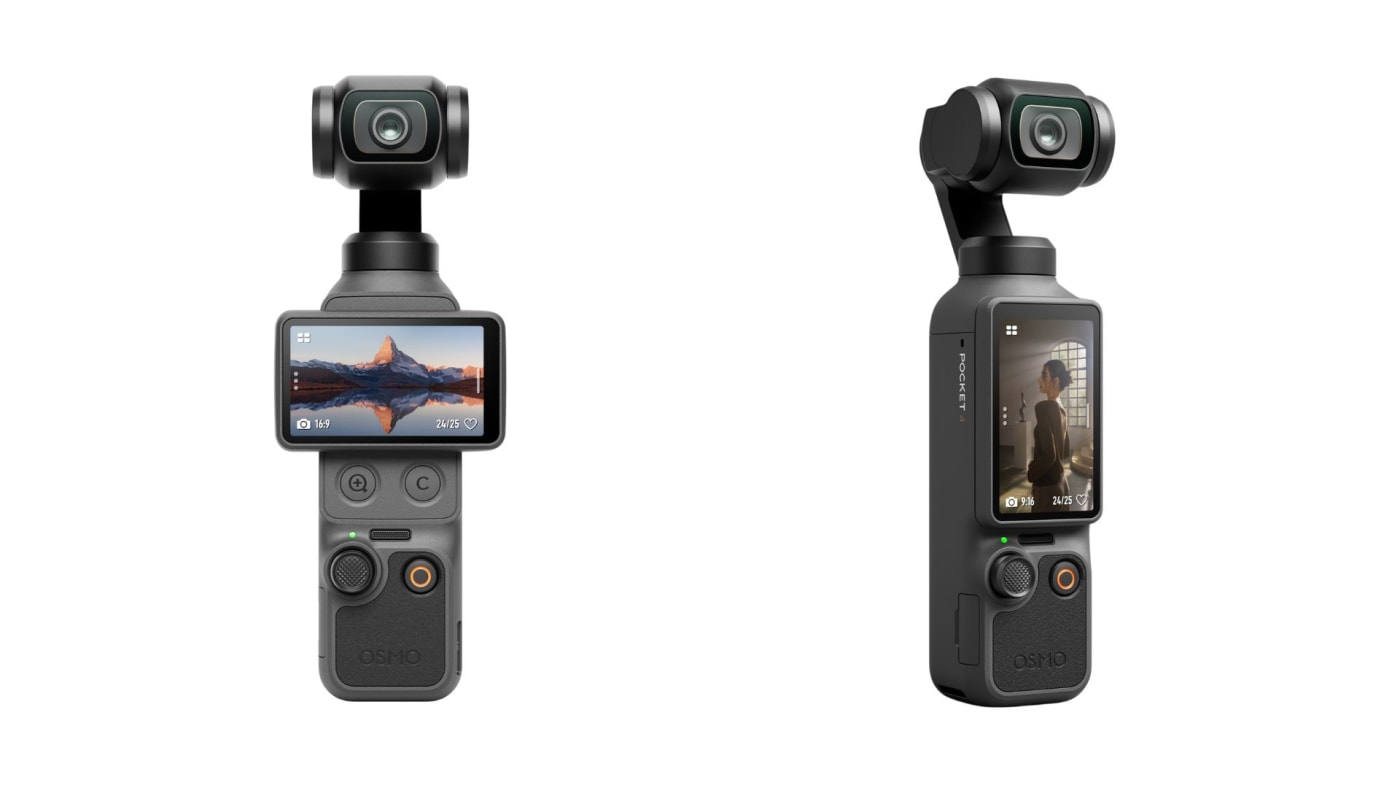
The DJI Osmo Pocket 3 is, by most measures, the most popular dedicated vlogging camera on the planet. Its combination of three-axis gimbal stabilization, a very capable 1-inch sensor, and a pocketable form factor made it the go-to camera for travel creators, documentary filmmakers, and everyday vloggers alike. It’s the kind of product that’s almost dangerous to follow up. And all camera makers have to toe this line at some point. Improve too little and you invite criticism; change too much and you alienate the fans.
DJI has threaded that needle pretty carefully with the Osmo Pocket 4. This highly-awaited release doesn’t reinvent the formula. With meaningful upgrades to slow-motion capability, color science, stills resolution, storage, and battery life, the Osmo Pocket 4 is more capable in ways that will matter most for those who will use this camera as a professional production tool rather than a camcorder.
Refinement, Not Revolution
DJI kept the same Type 1 (1-inch) sensor class and 20mm equivalent f/2 lens that gave the Pocket 3 its excellent image quality, but the Pocket 4 houses a new, upgraded 1-inch CMOS sensor. The gains from that new sensor include higher resolution output (37MP), improved low-light performance, and expanded 14-stop dynamic range that makes true 10-bit D-Log viable.
If you were hoping for optical zoom, you won’t find it here. However, because of the added resolution, DJI does now allow you to zoom to 4x, compared to the Pocket 3's 2x zoom. (Though there are rumors of a dual lens Osmo Pocket 4 Pro that might provide telephoto capability later down the road.)
There are also meaningful upgrades to other Pocket 3 limitations: autofocus, slow-motion fps, color grading flexibility, photo quality, on-board storage, and audio capture.
For most people, the Osmo Pocket 3 remains more than enough for daily vlogging and video capture. The Osmo Pocket 4 is really aimed more at those who find themselves running into the limitations of the Pocket 3 regularly.
Video Upgrades
The most eye-grabbing capability of the new Pocket 4 is its improved slow motion capture. The Pocket 4 can now capture 4K at 240 frames per second—up from 120fps on the Pocket 3. That means 10x slow motion at a 24fps timeline, or 8x at 30fps. For action scenes, wildlife moments, or cinematic b-roll, this is a huge upgrade.
Maybe the improvement set to make the biggest impact is to autofocus. The more intelligent ActiveTrack 7.0 is much stickier and now holds subject tracking at up to 4x zoom, with modes including Spotlight Follow and Dynamic Framing. The camera’s Intelligent AutoFocus appears to lock and track subjects moving through the frame with much more reliability than the Pocket 3.
The other headline is color. The Pocket 3 featured the D-Log M profile, which, while flexible, did not provide the capabilities of true log footage. The Pocket 4 brings true 10-bit D-Log with 14 stops of dynamic range. That’s a meaningful step up: one more stop than the Pocket 3, and a color pipeline that’s hopefully more capable for serious grading. (Grading D-Log M on the Pocket 3 was admittedly kind of terrible.) DJI claims improved tonality in difficult lighting conditions, and early reviews suggest the shadow detail and highlight recovery are noticeably better.
On the audio side, OsmoAudio now captures four channels of audio simultaneously — useful for interview setups and ambient sound recording.
The native ISO range has also expanded, from 50–12,800 on the Pocket 4, up from the Pocket 3’s 50–6,400 ceiling. That, combined with the larger dynamic range, should translate to better performance in challenging, mixed-lighting environments.
For creators who want quick, finished looks without touching a color suite, DJI has added six built-in Film Tones: CC Film, NC Film, Pastel, Warm Tone, Movie, and Retro. These are the kind of in-camera creative shortcuts that can make a difference in fast-turnaround social content.
Photos: A Massive Leap
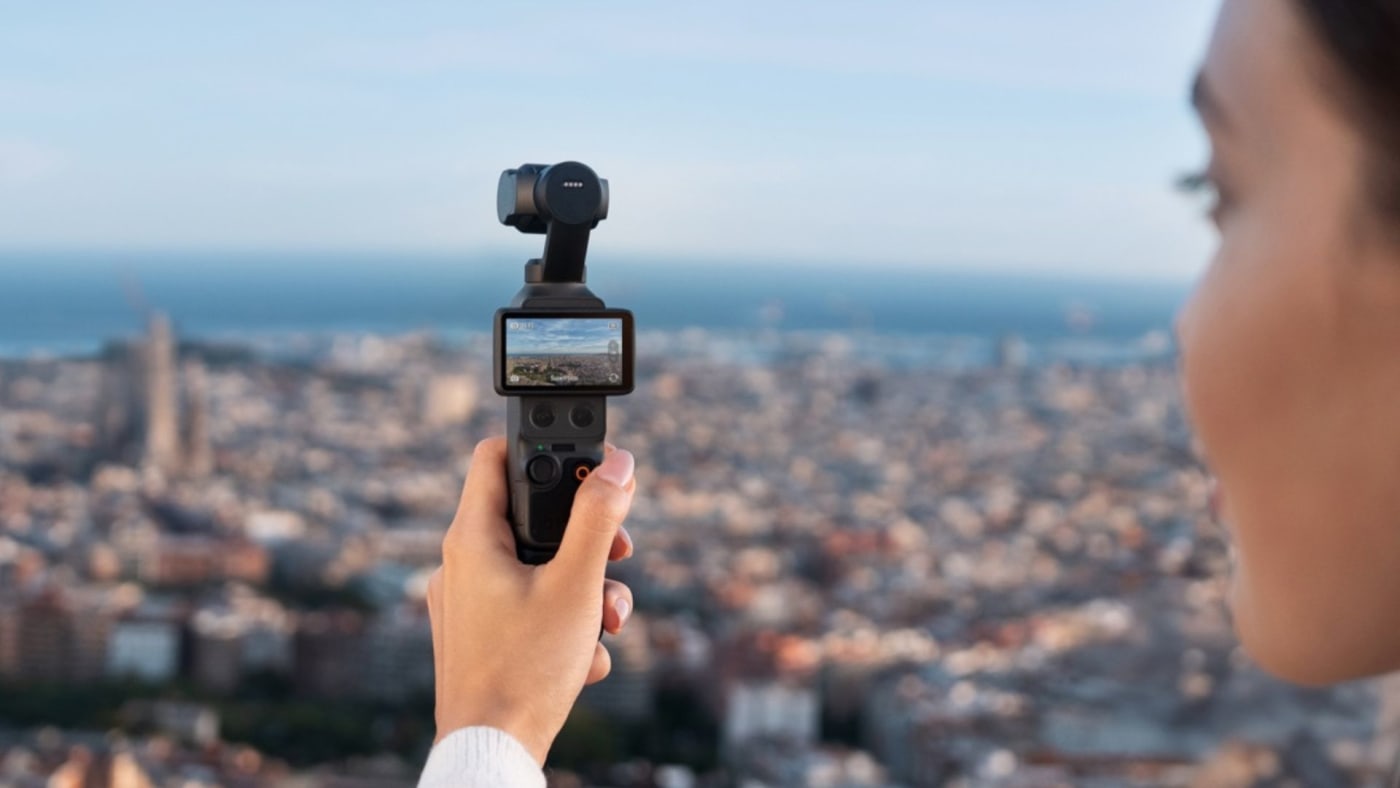
The Pocket 3 was primarily a video camera that also took photos. For some, the Pocket 4 might start to feel more like a capable stills camera too.
Still photo resolution jumps from 9.4 megapixels on the Pocket 3 to 37 megapixels on the Pocket 4—a dramatic increase that brings the camera into the sweet spot for social, travel, and some web editorial photography. This isn't going to replace any medium range dedicated stills camera, but it should allow you to swap between the Pocket and another camera a lot less. New shorter self-timer options are also on board for solo stills shooting.
Design and Usability: Smarter Controls
The Pocket 4 retains the Pocket 3’s beloved form factor: compact, pocketable, built around a rotating screen and a three-axis gimbal. But DJI has spent some time refining the controls.
Rotating the screen now starts recording automatically, which could be nice in run-and-gun situations. Two new buttons sit beneath the screen: a dedicated Zoom button that cycles between 1x, 2x, and 4x, and a customizable preset button. There’s also an improved joystick that allows users to move the camera backward, recenter the gimbal, and flip the frame.
The OLED screen gets a brightness boost to 1,000 nits, up from 700, which meaningfully improves outdoor usability in bright sun. The gimbal arm also accepts new magnetic accessories, including the fill light included in the Creator Combo.
Storage: Built-In and Fast
One of the bigger quality-of-life upgrades on the Pocket 4 is 107GB of built-in storage rated at 800MB/s transfer speeds. The Pocket 3 had no internal storage at all. For most vloggers, day-trippers, and travel creators, this eliminates the memory card problem entirely and means you can start shooting the moment the camera comes out of your pocket.
Plus, you still have the option of expanding your storage even further with the microSD card slot. And when it comes time to offload your footage for editing, be ready with a blazing fast SSD that's ready for on-the-go shooting like the OWC Envoy Pro Elektron or OWC Envoy Pro FX.
Battery Life: A Genuine Improvement
The Pocket 4 ships with a 1,545mAh battery—roughly a 20% increase over the Pocket 3—delivering a rated 240 minutes of recording time, compared to 166 minutes on the previous model. In real-world use, early reviewers are reporting around 2.5 hours at 4K, with more at lower resolutions. That’s a full day of casual vlogging without reaching for a charger.
Pro Workflow Opportunities and Improvements
The most significant workflow upgrade is the move to a true 10-bit D-Log color pipeline. Pocket 3 users who were treating that camera as a production tool had to work around its pseudo-log limitations. The Pocket 4’s D-Log M footage will integrate cleanly into DaVinci Resolve, Premiere Pro, or Final Cut Pro with a standard LUT. DJI includes LUTs with the camera.
The 4K/240fps slow motion also opens up storytelling options that weren’t available before. At the Pocket 4’s size, the ability to pull 10x slow motion without any additional equipment is genuinely remarkable.
The 107GB internal storage at 800MB/s means that offloading footage at the end of a day is fast. Pairing the Pocket 4 with a high-speed portable drive makes a smooth, efficient field workflow possible without a full editing rig. At that transfer speed, dumping a full card to an external drive takes only minutes.
Key Specs
- Sensor: New Type 1 (1-inch) CMOS (upgraded from Pocket 3; not a carryover sensor)
- Lens: 20mm equivalent, f/2
- Video: Up to 4K/240fps; 4K/120fps; 4K/60fps
- Slow Motion: 10x at 24p, 8x at 30p (4K/240fps)
- Color: True 10-bit D-Log M; 14 stops of dynamic range
- ISO Range: 50–12,800 (video, photo, slow motion)
- Photos: 37 megapixels (up from 9.4MP on Pocket 3)
- Built-in Storage: 107GB at 800MB/s (no microSD slot)
- Battery: 1,545mAh; rated 240 minutes
- Screen: 1.3-inch rotating OLED touchscreen; 1,000 nits brightness
- Stabilization: 3-axis mechanical gimbal
- Tracking: ActiveTrack 7.0; up to 4x zoom
- Zoom: 1x, 2x, 4x (lossless at 2x)
- Audio: OsmoAudio 4-Channel
- Film Tones: CC Film, NC Film, Pastel, Warm Tone, Movie, Retro
- Connectivity: Wi-Fi, Bluetooth
- Announced: April 16, 2026
Pricing and Availability
Here’s where it gets complicated for U.S. buyers. DJI’s FCC authorization for the Osmo Pocket 4 is still pending, meaning the camera cannot be sold through official U.S. retail channels at launch. DJI confirmed this on announcement day. This pending authorization is due to an effective ban on some DJI and other foreign made products by the U.S. government that started late last year. You can read more about the reasons behind that ban here.
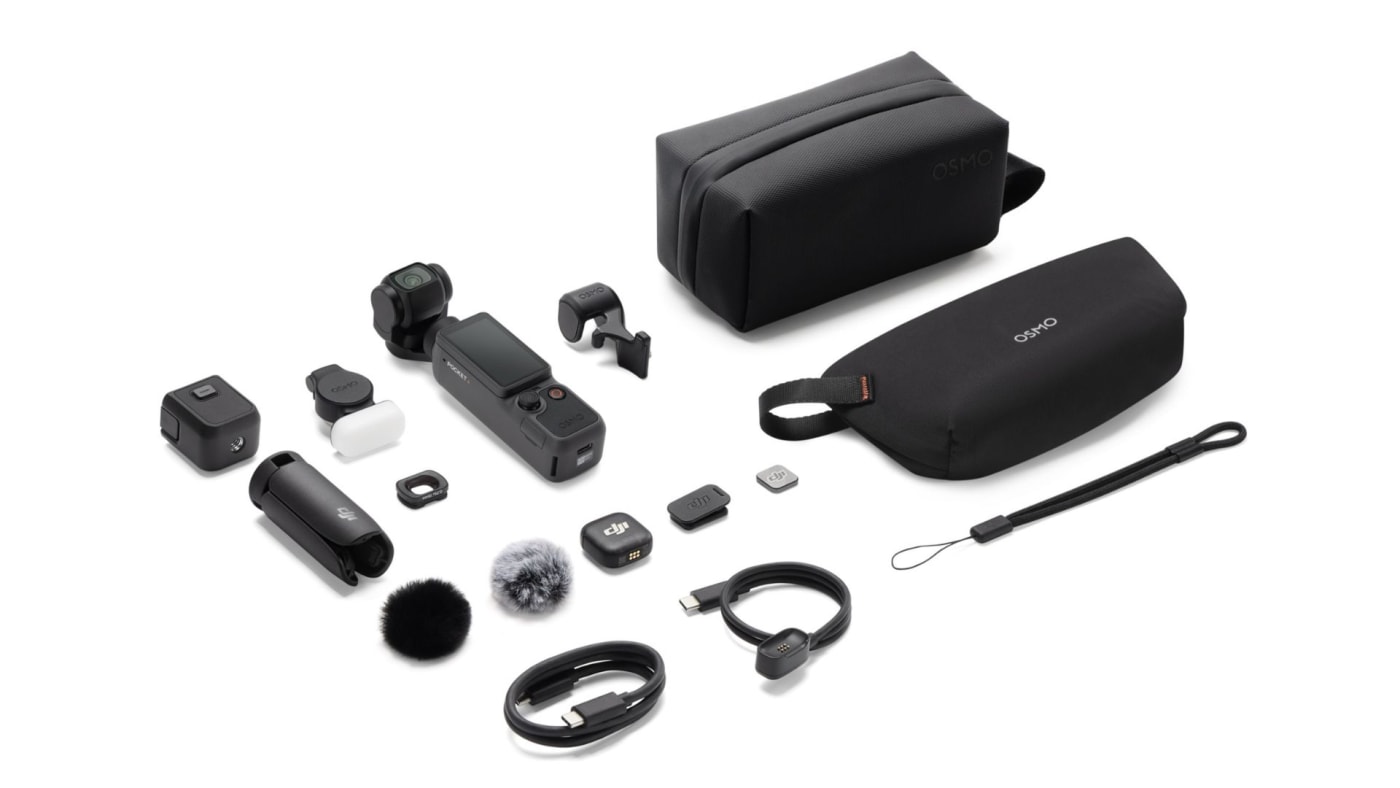
Internationally, the Pocket 4 is available now. Pricing starts at €499 (approximately $585 USD) for the Standard Combo, which includes the camera and a tripod handle. The Creator Combo—adding the DJI Mic 2, a magnetic fill light, a wide-angle lens adapter, mini tripod, and carrying case — is priced at approximately €649 (roughly $760 USD).
That said, DJI products have a way of finding their way to U.S. consumers even amid regulatory complications. The Osmo Pocket 3 continued to appear at select retailers throughout the tariff and trade restriction period, and gray-market imports remained accessible through third-party sellers on major platforms. It’s reasonable to expect that the Pocket 4 may follow a similar path. U.S. buyers willing to import through those channels should be aware that warranty coverage and official support may not apply, but the camera itself should function normally.
Another option is to grab a Pocket 3. That remains a great camera that is going to provide 80-90% of what the Pocket 4 delivers and now at a reduced price. For instance, you can get the standard Pocket 3 kit for only $499 at B&H while the Pocket 3 Creator Kit, which comes with a DJI Mic 2, a wide angle lens clip, and an extended battery, is now only $629.
Keep an eye on DJI’s official channels for any update on U.S. authorization for the Pocket 4. If and when it clears, expect the Pocket 4 to land on shelves quickly.
Other topics you might like

Godox's C100 is a Novel Light Meter and Mini Camera With a Transparent Display
Updated on Aug 5, 2026
Peak Design's Field Bracket is a Modular, AirTagged Evolution of the L-Bracket
Updated on Jul 28, 2026
Sony’s New FX5 Brings New Sensor, Open Gate, VENICE-level Features to a Compact Cinema Camera
Updated on Jul 23, 2026