 USA + International
 OWC Canda
 OWC Europe
Canon’s New RF 20-50mm f/4L IS USM PZ is its First L-Series Lens With Power Zoom
The versatile zoom lens will be available in a kit with the new, video-focused Canon R6V
Wayne Grayson • May 13, 2026
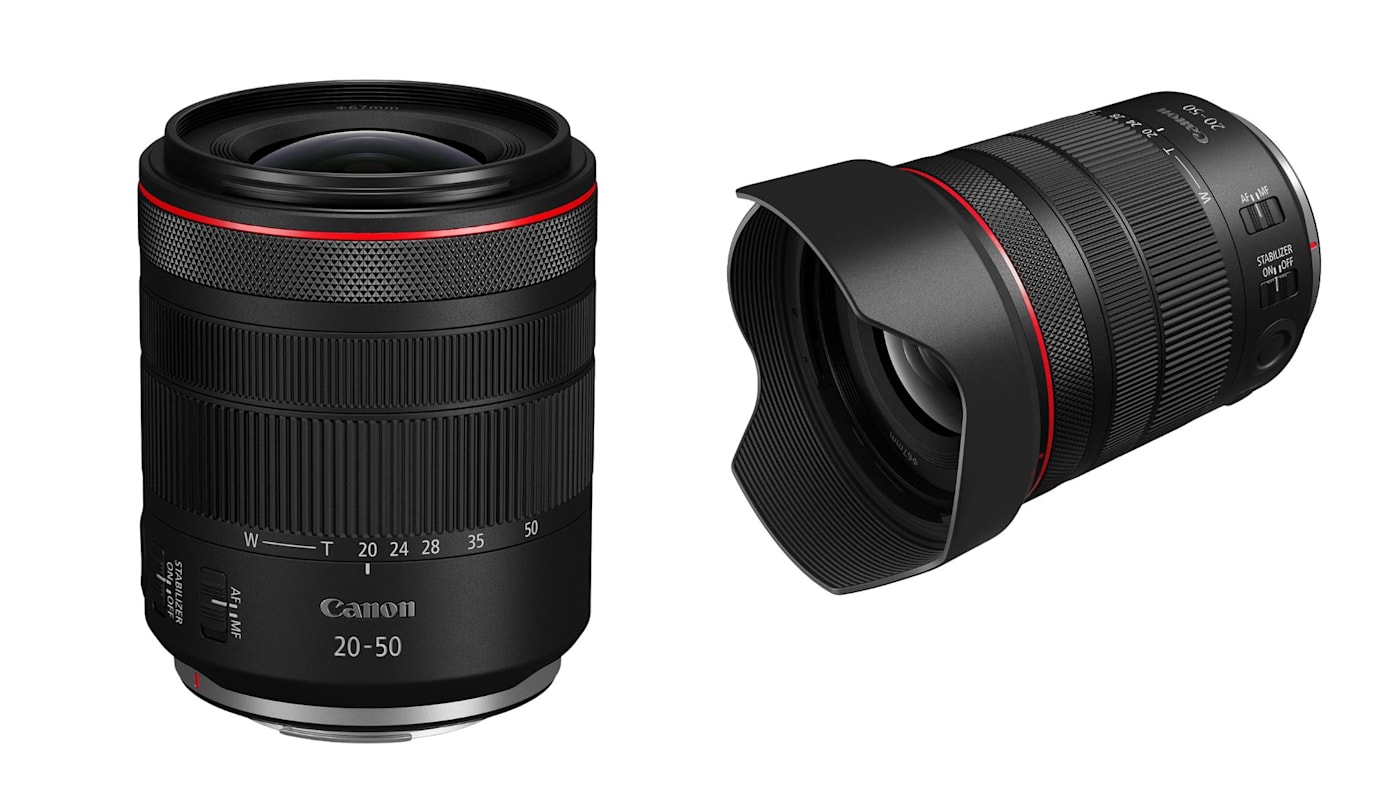
Canon has announced the RF 20-50mm f/4L IS USM PZ, the first L-series lens from with built-in power zoom. The lens was announced alongside the Canon R6V, a new R6 variant that puts the guts of the R6 III into a video-first body designed to appeal to video professionals and creators.
Canon has offered power zoom lenses in the RF-S lineup and in its Cinema EOS glass for years. But bringing power zoom to the L-series—Canon's professional-grade optics line—signals that motorized zoom control has graduated from a nice-to-have for run-and-gun shooters to a tool with broader appeal to more creators.
Where Power Zoom Comes in Handy
On a traditional zoom lens, controlling focal length during a video shot means physically turning the zoom ring, which involves, you know, grabbing the zoom ring and wrenching it left and right. Obviously, this introduces vibration, movements and inconsistent zoom speed—all of which are hard to smooth out in post, even if the camera is mounted to a tripod. Power zoom replaces that with a motorized system that moves the zoom elements at a consistent, controllable rate.
On the RF 20-50mm PZ, that control extends well beyond the lens itself. Zoom speed and range can be managed through:
- The zoom lever built into the new EOS R6V body
- Canon's BR-E2 Wireless Bluetooth Remote Control
- The Canon Camera Connect app on a smartphone or tablet
- Compatible gimbals with zoom control support
Gimbal-controlled zoom opens up shooting possibilities that would have required a dedicated camera assistant or a second operator not long ago. For documentary shooters, event videographers, and content creators working alone, this feature greatly expands upon what has been possible in a single-operator setup.
The zoom mechanism uses two dedicated Nano USM motors, the same compact, quiet motor type Canon favors in its smaller RF lenses, while a third Nano USM handles autofocus.
L-Series Build, Creator-Friendly Size
At 420 grams (just under a pound) and 98.4mm long, this is a compact lens by L-series standards. The 67mm front filter thread is a common size, which makes it easy to pair with existing ND and polarizer filter kits, useful for a lens aimed at video shooters who need light control outdoors.
The optical formula includes 13 elements in 11 groups, with three Ultra-low Dispersion (UD) elements to manage chromatic aberration and two aspherical elements for edge-to-edge sharpness. Canon has applied its full suite of professional coatings: Super Spectra and Air Sphere coatings to minimize flare and ghosting, plus a fluorine coating on the front element for repelling dust, moisture, and smudges.
The lens focuses as close as 0.24 meters (about 9.5 inches), with a maximum magnification of 0.33x. In other words, it’s not a macro lens, but it is capable enough for product-style close-ups and detail shots within a run-and-gun workflow.
Eight Stops of Combined Stabilization
The RF 20-50mm PZ includes optical image stabilization rated at up to six stops of correction on its own. When used on a camera with in-body image stabilization — including the EOS R6V—Canon's Coordinated Control IS combines sensor-shift and optical stabilization for up to eight stops of total shake correction.
For video, that number translates directly into smoother handheld footage with less dependence on a gimbal for basic stability. Eight stops is a significant buffer, and the Coordinated Control system, which Canon introduced with the R6 Mark III, does a better job of avoiding the over-corrected, floaty look that some IBIS implementations produce.
A Companion for the R6V
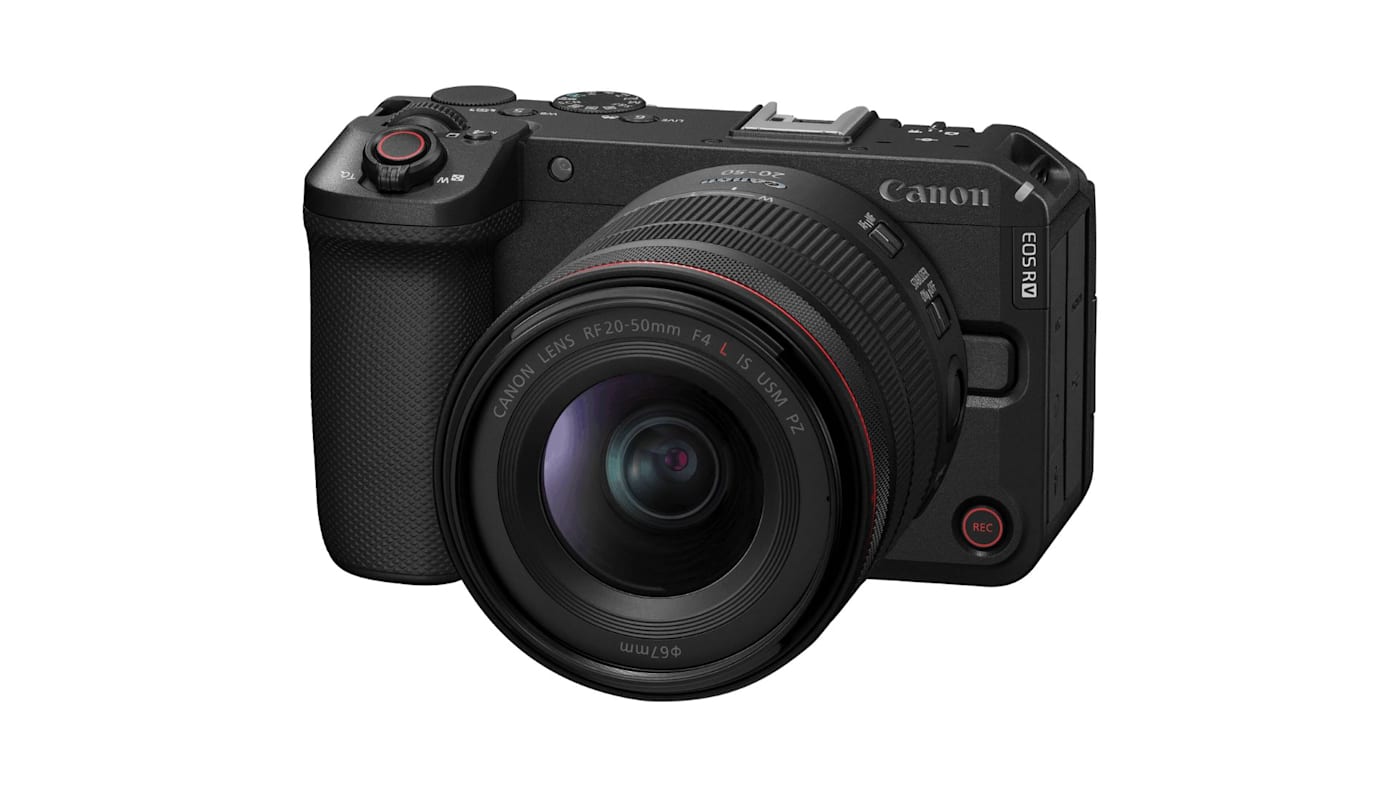
Canon will be selling the RF 20-50 PZ with the new R6V as a kit for $3,699, a $200 savings over buying them separately. The R6V's dedicated zoom lever on the body directly controls the lens's power zoom, giving solo shooters smooth focal length changes without taking a hand off the camera or reaching for a remote. Be sure to read our full coverage of the R6V here.
That said, the RF 20-50mm PZ will work on any RF-mount camera. On bodies without a zoom lever, power zoom is still accessible through the Camera Connect app or a BR-E2 remote. Manual zoom is also available via a PZ/MZ switch on the lens barrel itself, so there's nothing lost for photographers or hybrid shooters who prefer direct control. The full 20-50mm range covers wide-angle environmental shots through a natural-looking short telephoto — a range that suits interviews, walk-and-talk footage, and general-purpose video work without requiring a lens swap.
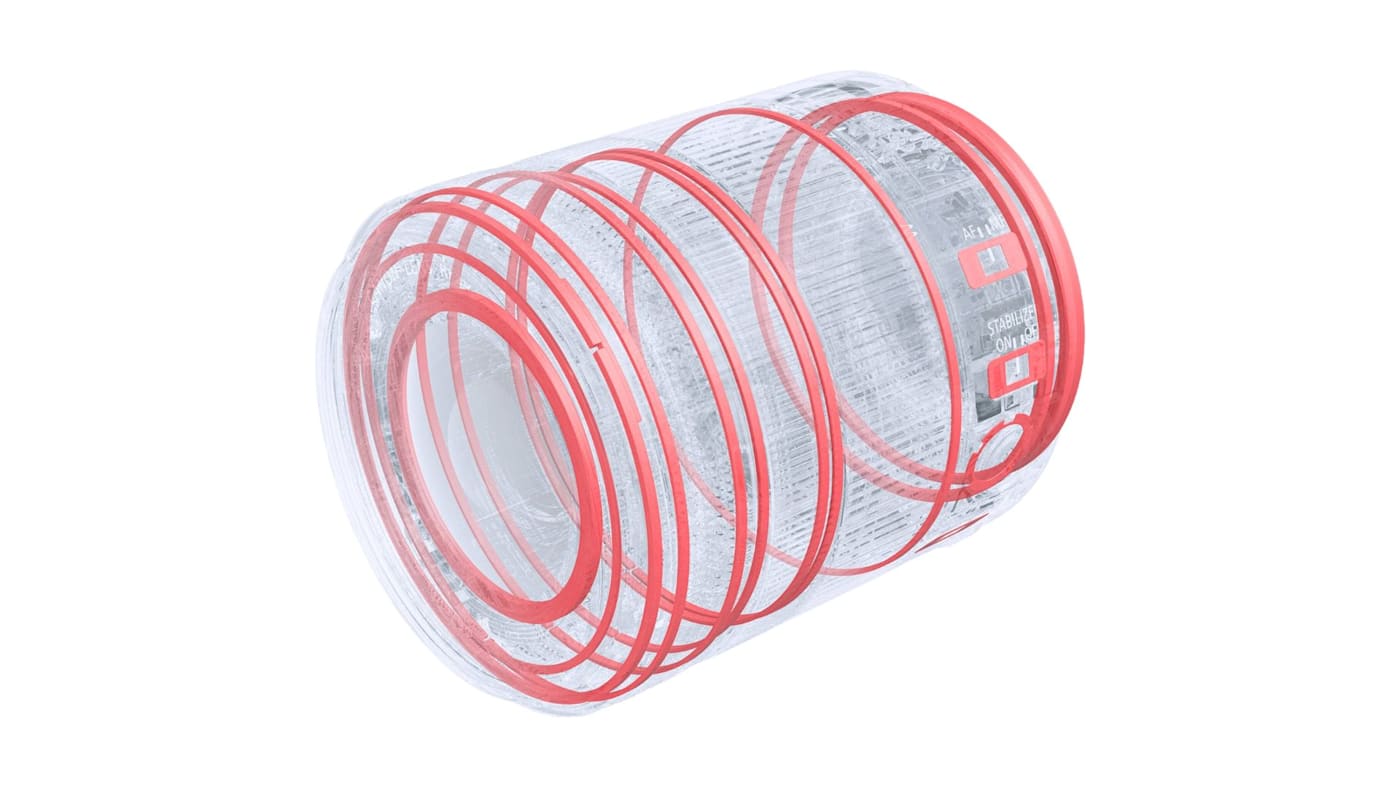
At f/4, this isn’t the fastest RF lens on the market, but for still photographers, the constant f/4 aperture, L-series sharpness, and weather sealing make this a viable travel and documentary lens. That said Canon's intent with this lens is clear: it was primarily designed to be a versatile zoom for video, and the R6V is where it works best.
Other topics you might like

Godox's C100 is a Novel Light Meter and Mini Camera With a Transparent Display
Updated on Aug 5, 2026
Peak Design's Field Bracket is a Modular, AirTagged Evolution of the L-Bracket
Updated on Jul 28, 2026
Sony’s New FX5 Brings New Sensor, Open Gate, VENICE-level Features to a Compact Cinema Camera
Updated on Jul 23, 2026
Instantly Add Autofocus to Vintage Manual Focus Lenses With FotodioX PRONTO Adapters
Updated on Jul 8, 2026