USA + International
 OWC Canda
 OWC Europe
Canon’s New EOS R6V Adapts the R6 III Into a Video-First Body Aimed at Creators
Canon's response to the Nikon ZR should give video professionals and creators a lot to think about.
Wayne Grayson • May 13, 2026
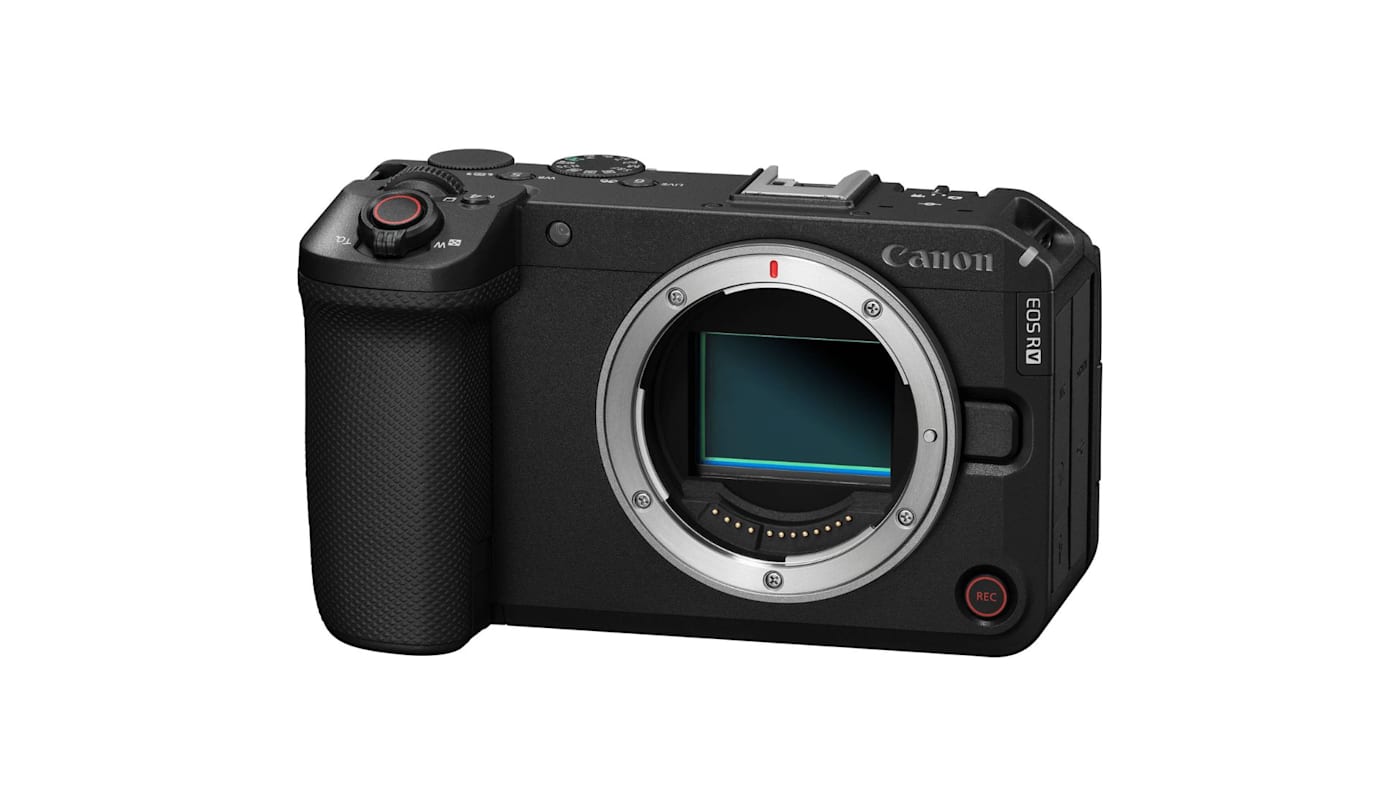
The Canon R6 III garnered rave reviews when it was released last year thanks to its combination of true hybrid, full-frame capability and its attractive $2,799 price point. So, we were caught a bit off guard when Canon announced a new R6 model this week—the R6V. And we were doubly surprised when we found that the R6V eschews the R6 III’s hybrid design for a body and feature set that heavily prioritize video.
To our relief, Canon is not replacing the R6 III with the R6V. Rather, the R6V is a variant of the R6 III aimed squarely at content creators. Canon took the guts of the R6 III and put them in a package most conducive to shooting video with. In fact, it’s safe to think of the R6V as Canon’s response to the Nikon ZR. Though Canon’s compact C50 cinema camera was announced around the same time as the Nikon ZR, Nikon’s compact cinema camera stole most of the attention and excitement thanks to its RED color science, large rear display, and very attractive $2,199 price point.
While a very capable camera aimed at higher-end productions, the Canon C50 just wasn’t a suitable competitor to the type of cinema camera that Nikon had produced. This new R6V—priced at just $2,499—is. In fact, the new R6V takes some of its creator-focused creature comforts a bit further than the ZR.
A Video-First R6 III Variant
At its core, the R6V shares the same DNA as the EOS R6 Mark III. It packs the same 32.5-megapixel full-frame CMOS sensor and the same Dual Pixel CMOS AF II autofocus system with subject tracking for people, animals, and vehicles. It has the same DIGIC-X processor. In Photo Mode, it can even rattle off full-resolution stills at up to 40 frames per second via its electronic shutter.
With all of these features, the R6V technically remains every bit the hybrid camera that the R6III is.
But while the capability remains, Canon has retuned the rest of the camera’s design around video as the primary use case — and several of those changes are significant.
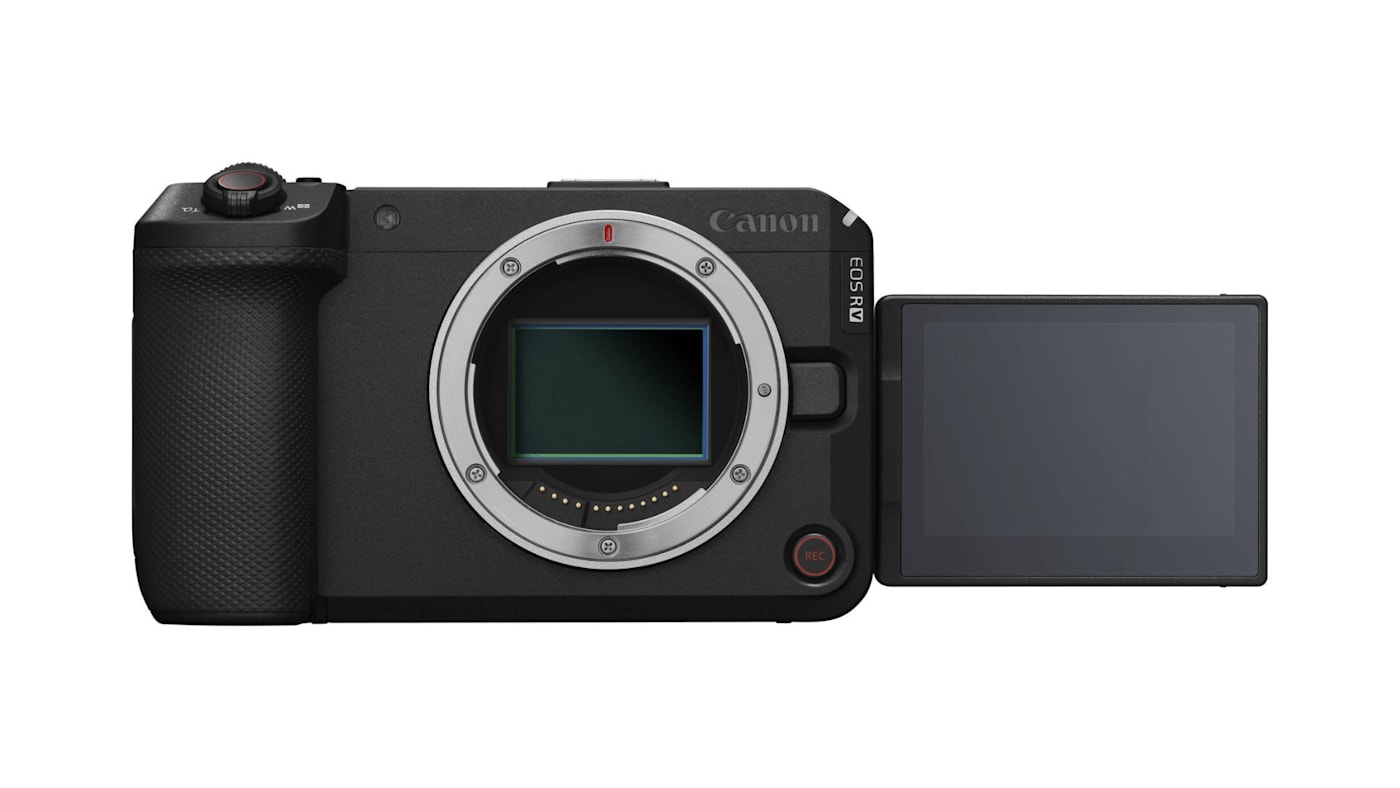
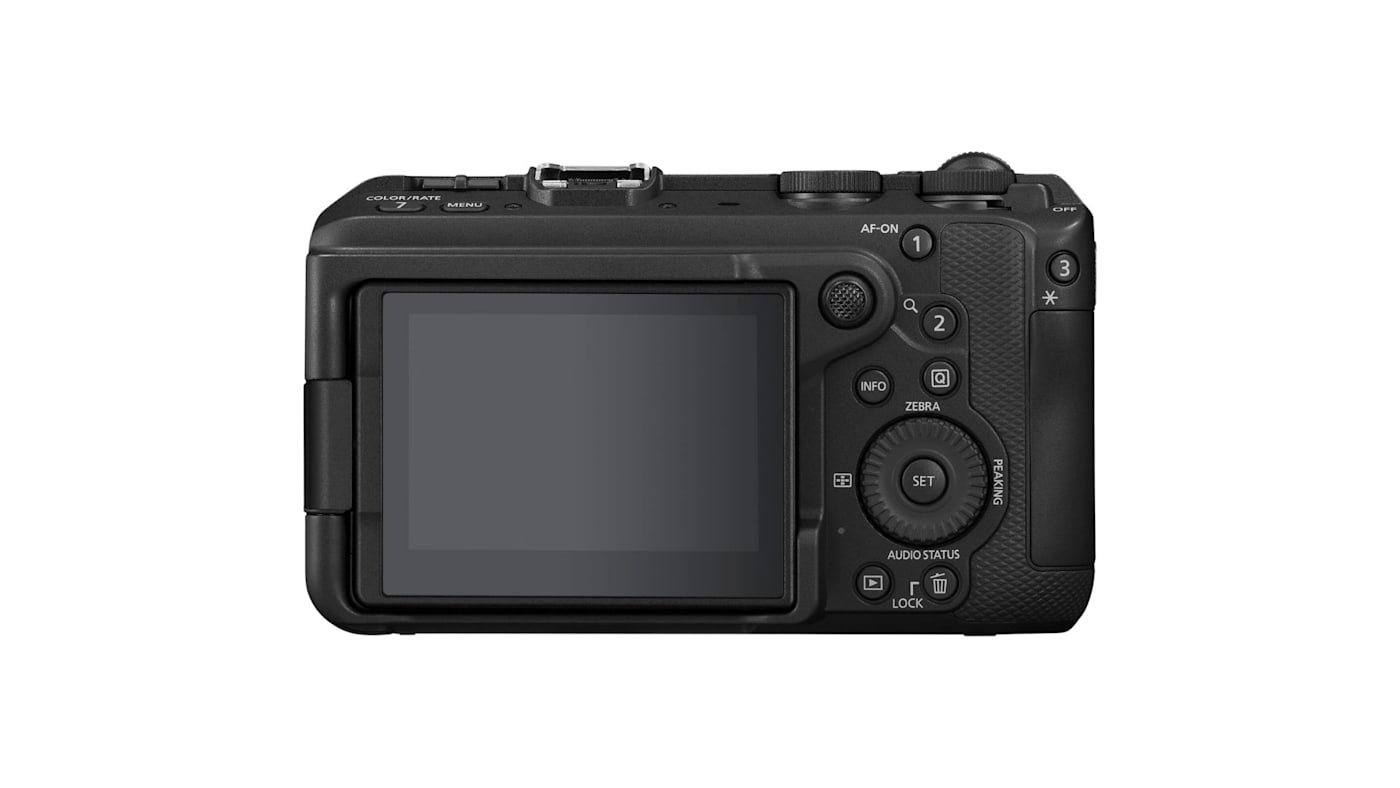
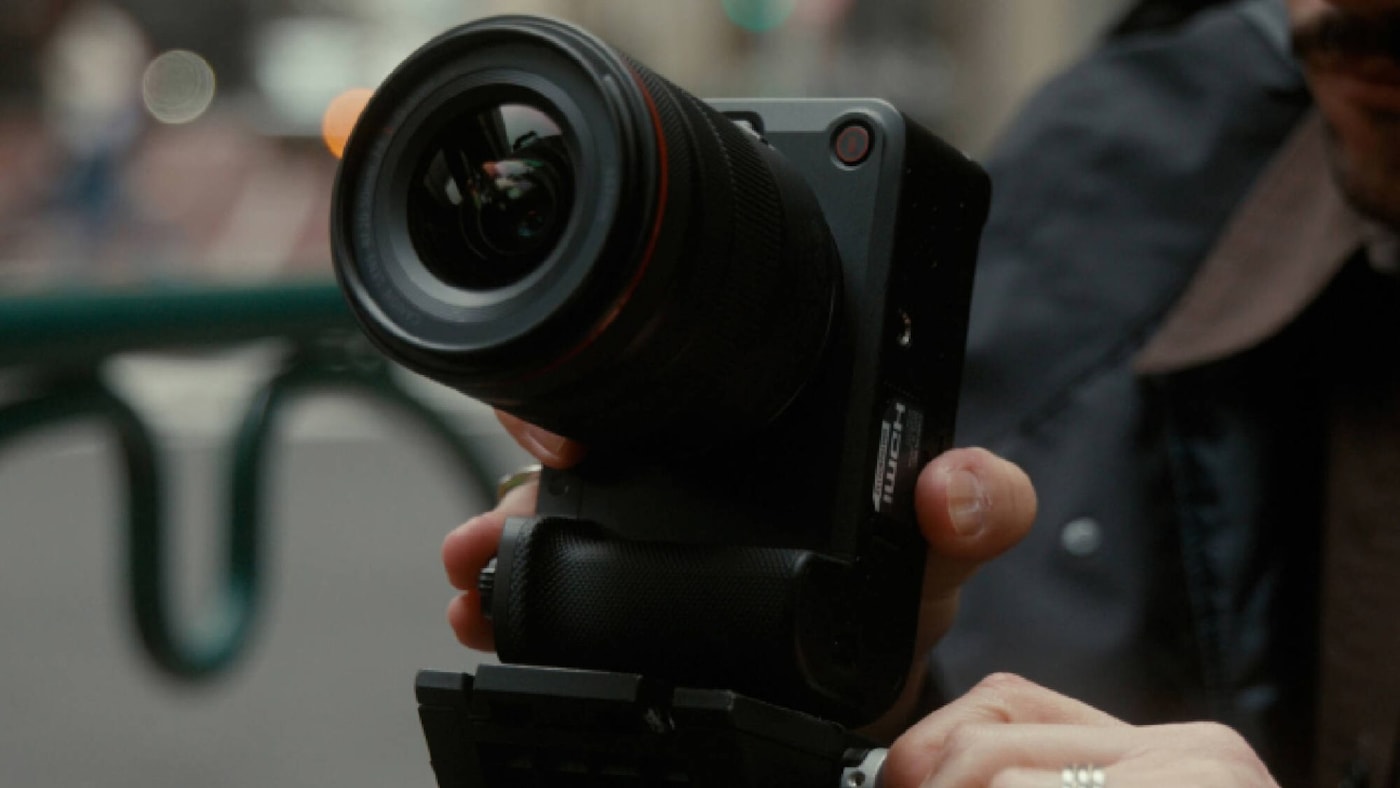
This is evident by just looking at the camera. While the R6 III has the classic silhouette of a photography camera, the R6V is much less curvy, and much more streamlined. This is a camera designed to be compact for run and gun shooting, and built to easily fit into a tripod or gimbal loadout.
No EVF, But It Does Have an Internal Fan
Depending on how you approach this camera, maybe the most controversial change in the R6V versus the R6 III is the removal of the EVF. Instead, you’ll need to do all of your framing and review from the 3-inch vari-angle display on the rear of the camera.
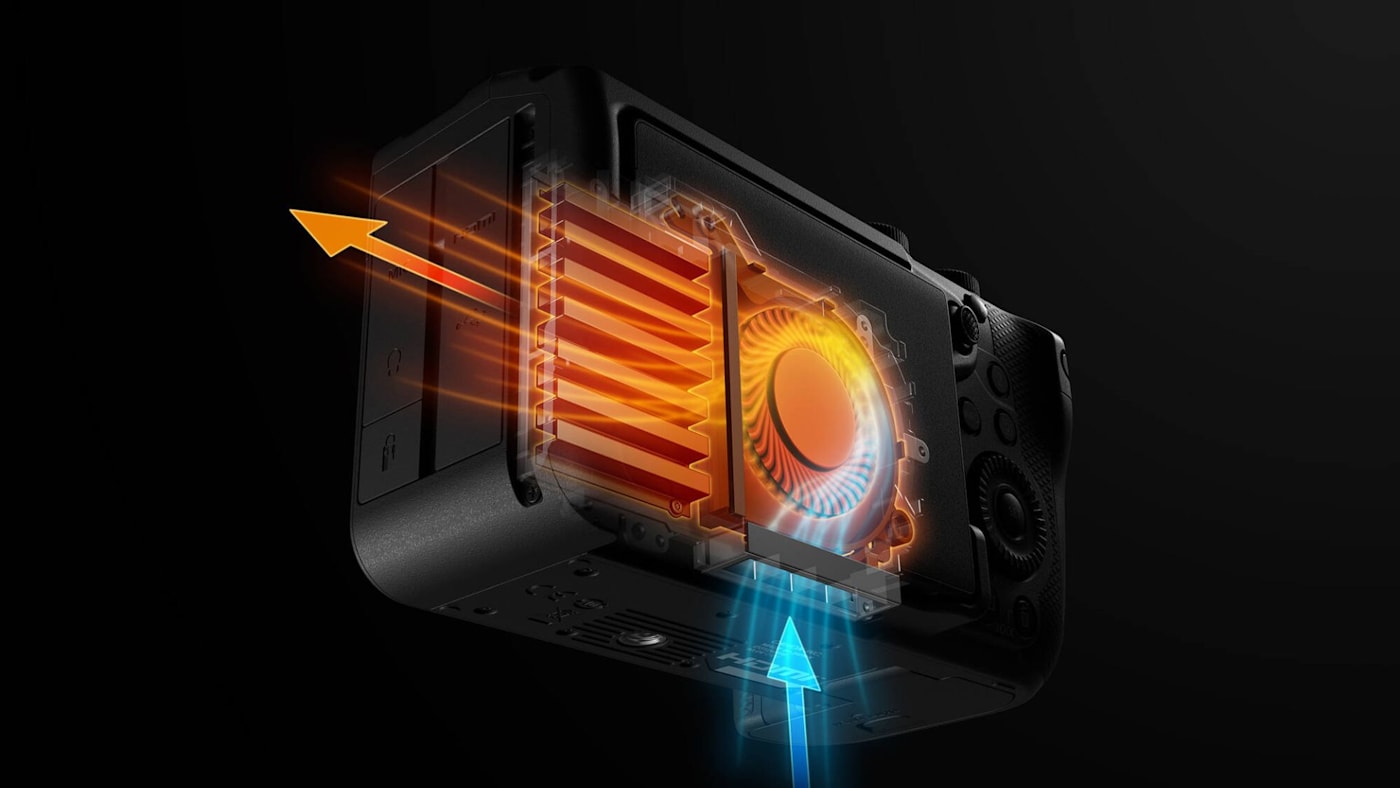
The most important addition to the R6V, however, is a built-in active cooling fan with three selectable levels. For content creators and filmmakers shooting long interviews, live events, or documentary footage, overheating has been a persistent frustration with previous Canon mirrorless cameras. The R6V addresses it directly.
Canon says 4K/60p recording at room temperature now runs for approximately two hours—roughly 4X longer than the fan-less R6 III can manage. Open-gate 7K/30p recording, previously limited to about 33 minutes on the R6 III, can now run as long as the battery holds.
7K Open Gate Recording
The R6V records 7K Canon RAW at up to 6960 x 4640 in the 3:2 open-gate format — the same sensor-width readout first introduced on the Cinema EOS C50 last year.
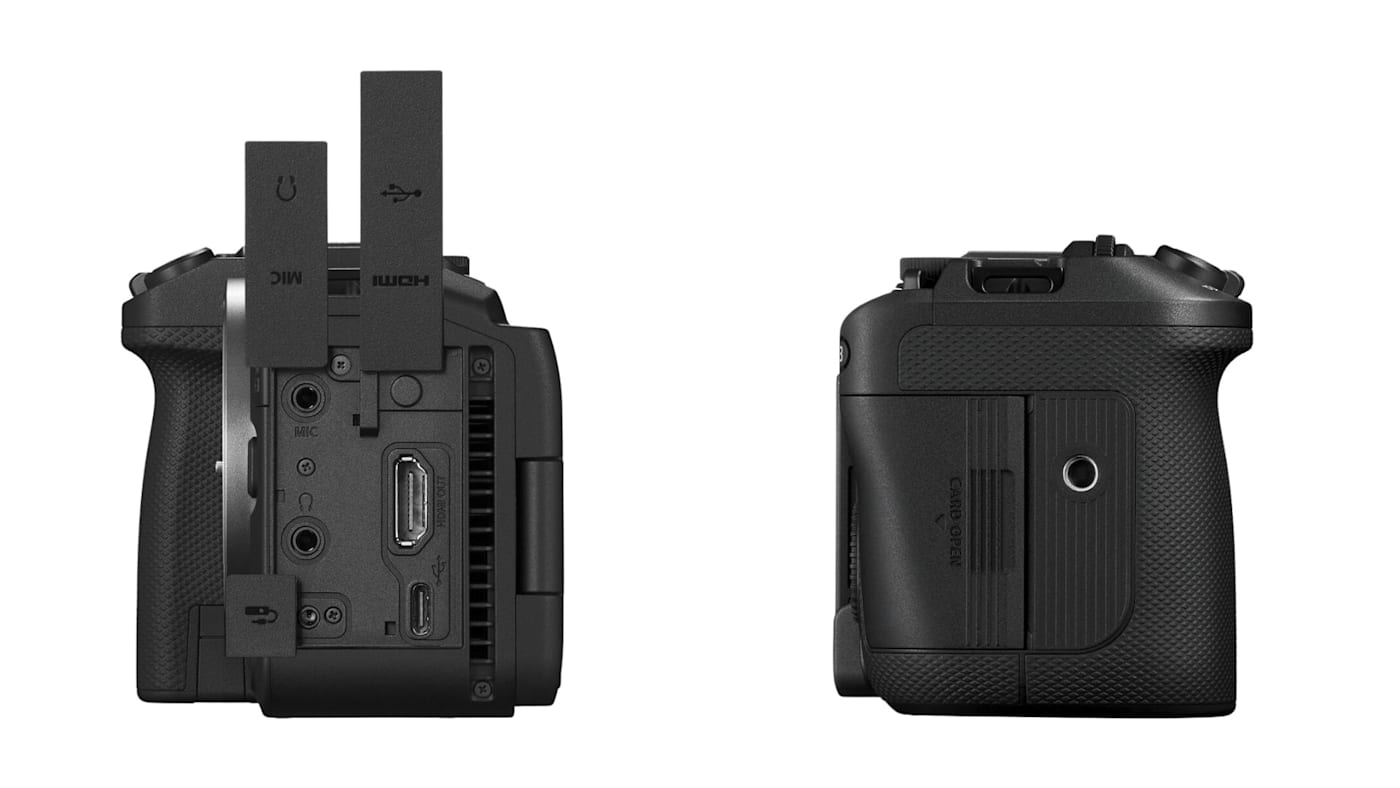
Further video capabilities include full-sensor 4K from an oversampled 7K readout and uncropped 4K at 120p, 2K at 180p, and 7K RAW Light up to 60p. For external recording, the R6V is equipped with a full-size HDMI port that supports Atomos 7K RAW output.
Canon Log 2 on the R6V delivers an estimated 15 stops of dynamic range. The camera is equipped with a CFexpress Type B slot and an SD card slot, enabling redundant recording, sub-recording, or proxy workflows.
Creator-First Design Features
Canon has built out a thoughtful set of features tailored specifically to solo creators and streamers. The combination of these features could very well make it a more attractive overall package than the ZR.
The R6V includes:
- A vertical tripod mount with an auto-rotating UI for social media-oriented framing
- A front-mounted secondary movie record button for easy one-handed operation
- A dedicated Live button for direct streaming
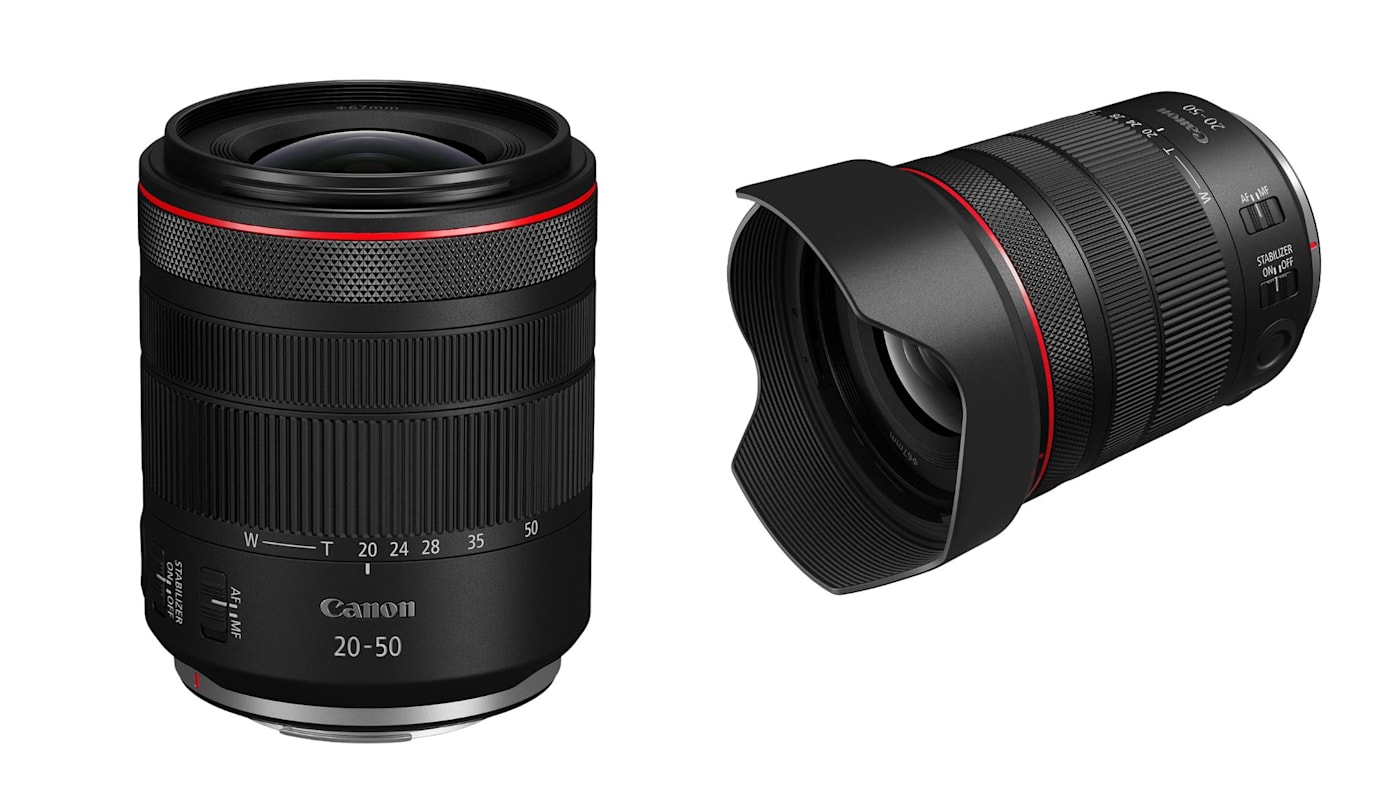
- A zoom lever designed to work with the companion, power zoom RF 20-50mm f/4 L IS USM PZ lens
- A tally lamp for on-set awareness
- UVC/UAC webcam functionality at up to 4K/60p
- Four-channel audio with support for the TASCAM CA-XLR2d-C adapter
- EOS VR System compatibility for spatial video production
Exposure monitoring tools include waveforms, false color, and zebras while the 3-inch vari-angle LCD touchscreen and dedicated White Balance and Color Mode buttons round out an interface clearly designed to minimize menu-diving during a shoot.
What the R6V Gives Up
The removal of the electronic viewfinder is the most significant compromise. Shooters who rely on an EVF for precise exposure evaluation in bright light or for tracking fast subjects will notice its absence.
The electronic-shutter-only design also means a loss of dynamic range compared to the R6 III's mechanical shutter option — a real consideration for photographers who expect to use this camera across stills and video assignments.
The Companion Lens: RF 20-50mm f/4 L IS USM PZ
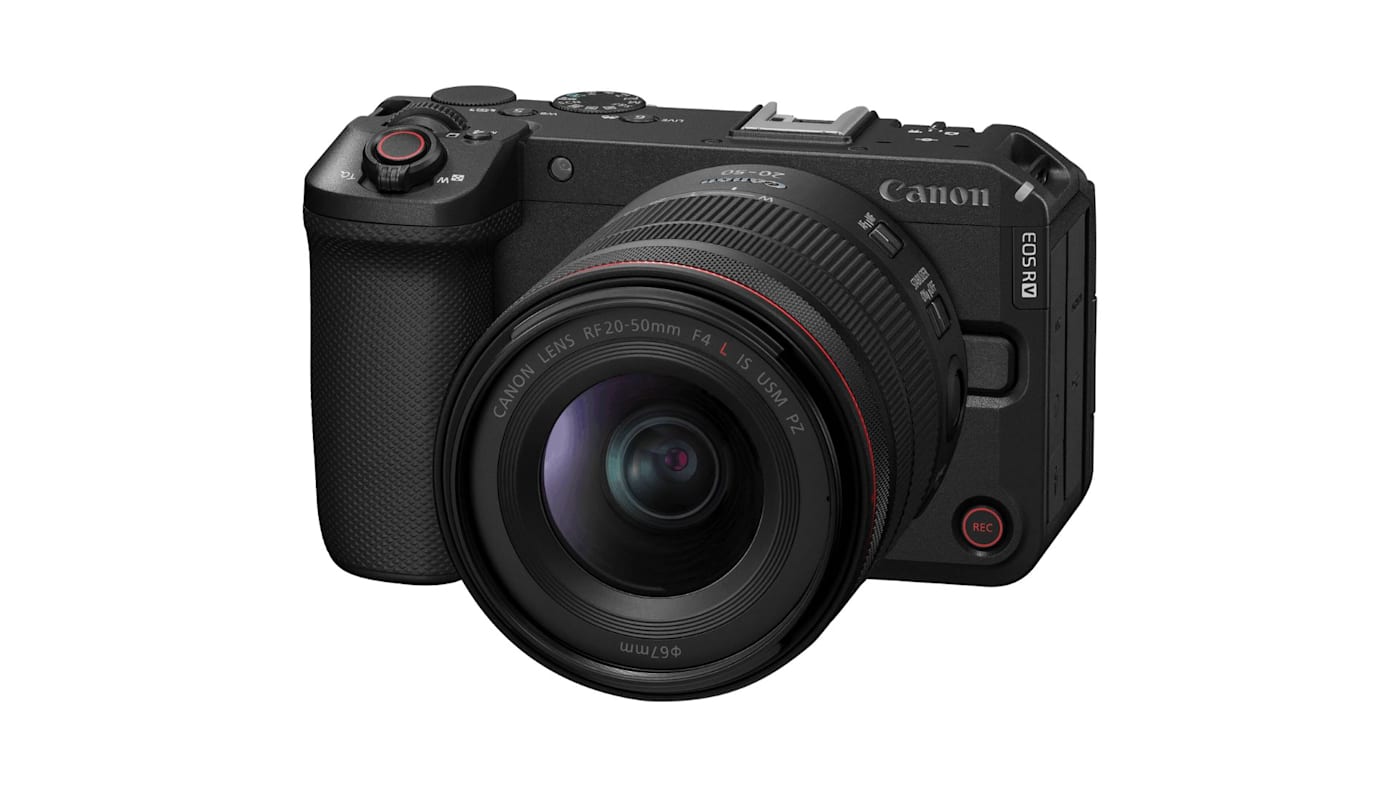
Canon is launching the R6V alongside a new RF 20-50mm f/4 L IS USM Power Zoom lens — the first RF-mount L-series optic with power zoom capability, and notably the first RF power zoom that can also be switched to traditional manual zoom operation.
Weighing under a pound with a 67mm filter thread, the lens features six stops of optical image stabilization on its own, expanding to eight stops when combined with a body's IBIS system. Zoom speed can be controlled directly on the camera, through Canon's Camera Connect app, or via a Bluetooth remote—making it especially useful for single-operator documentary and streaming setups. The optical formula uses 13 elements in 11 groups, including three UD and three aspherical elements, with minimal focus breathing and a fluorine front coating.
Read more about the RF 20-50 in our full post here.
Pricing and Availability
The Canon EOS R6V is scheduled to ship in late June for $2,499 and is up for pre-order now. A kit pairing the R6V with the new RF 20-50mm f/4 L IS USM PZ lens will be available for $3,699.
Storage for Every Frame You Capture
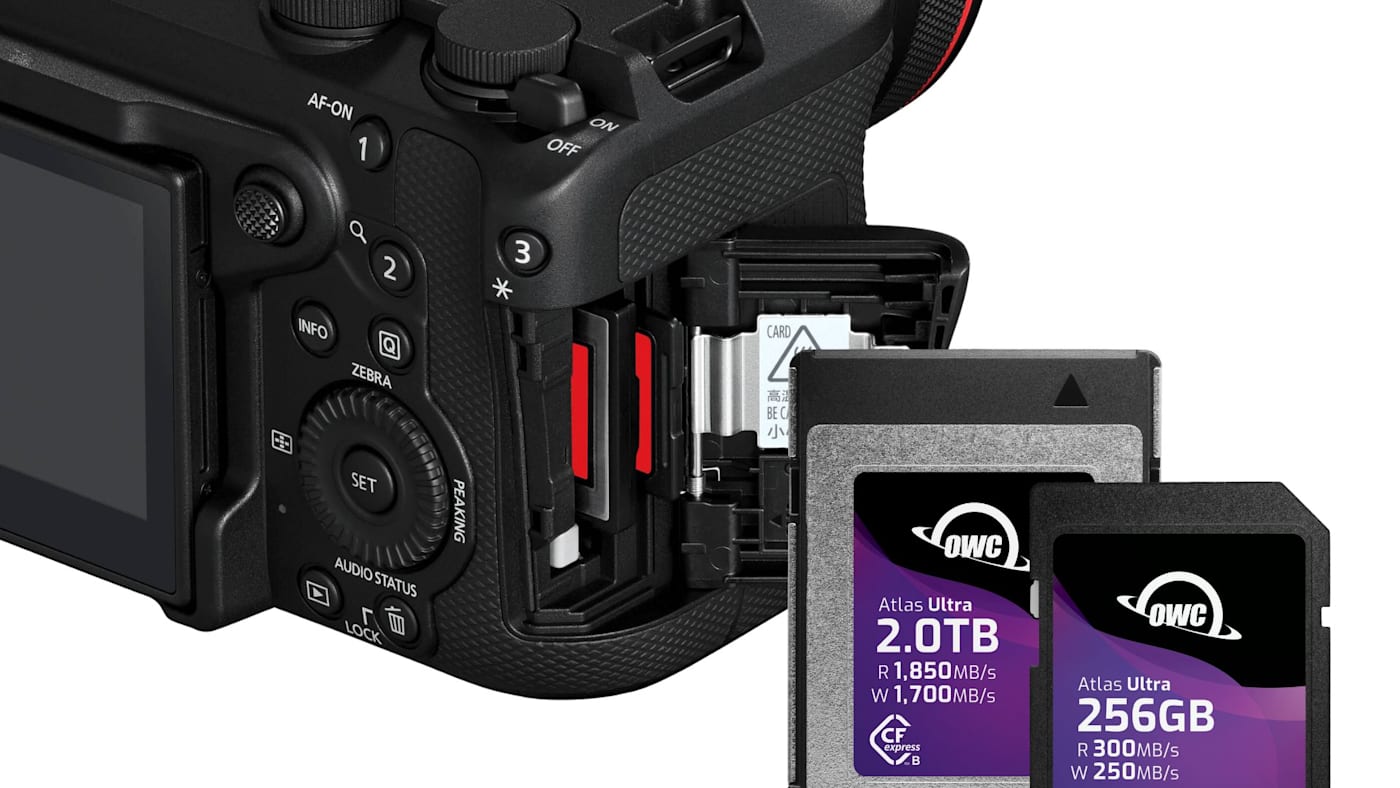
The R6V uses a CFexpress Type B slot for its highest-resolution RAW recording modes. Whether you're shooting 7K open-gate Canon RAW or running long-form 4K/60p sessions, your storage needs to keep pace with your camera.
OWC offers a full range of CFexpress Type B cards, including the Atlas Ultra. With speeds up to 3,650 MB/s, Atlas Ultra is designed to handle any video format you can throw at it. And with capacities up to 2TB, you can shoot all day and never have to swap a card.
Pair the Atlas Ultra with our Atlas CFexpress Card Reader and one of our high-performance Thunderbolt external SSDs, and watch your offload and backup times fall from hours to minutes.
Check out the perfect companions for the Canon R6V:
OWC Atlas Ultra CFexpress Type B Card
Other topics you might like

Godox's C100 is a Novel Light Meter and Mini Camera With a Transparent Display
Updated on Aug 5, 2026
Peak Design's Field Bracket is a Modular, AirTagged Evolution of the L-Bracket
Updated on Jul 28, 2026
Sony’s New FX5 Brings New Sensor, Open Gate, VENICE-level Features to a Compact Cinema Camera
Updated on Jul 23, 2026