USA + International
 OWC Canda
 OWC Europe
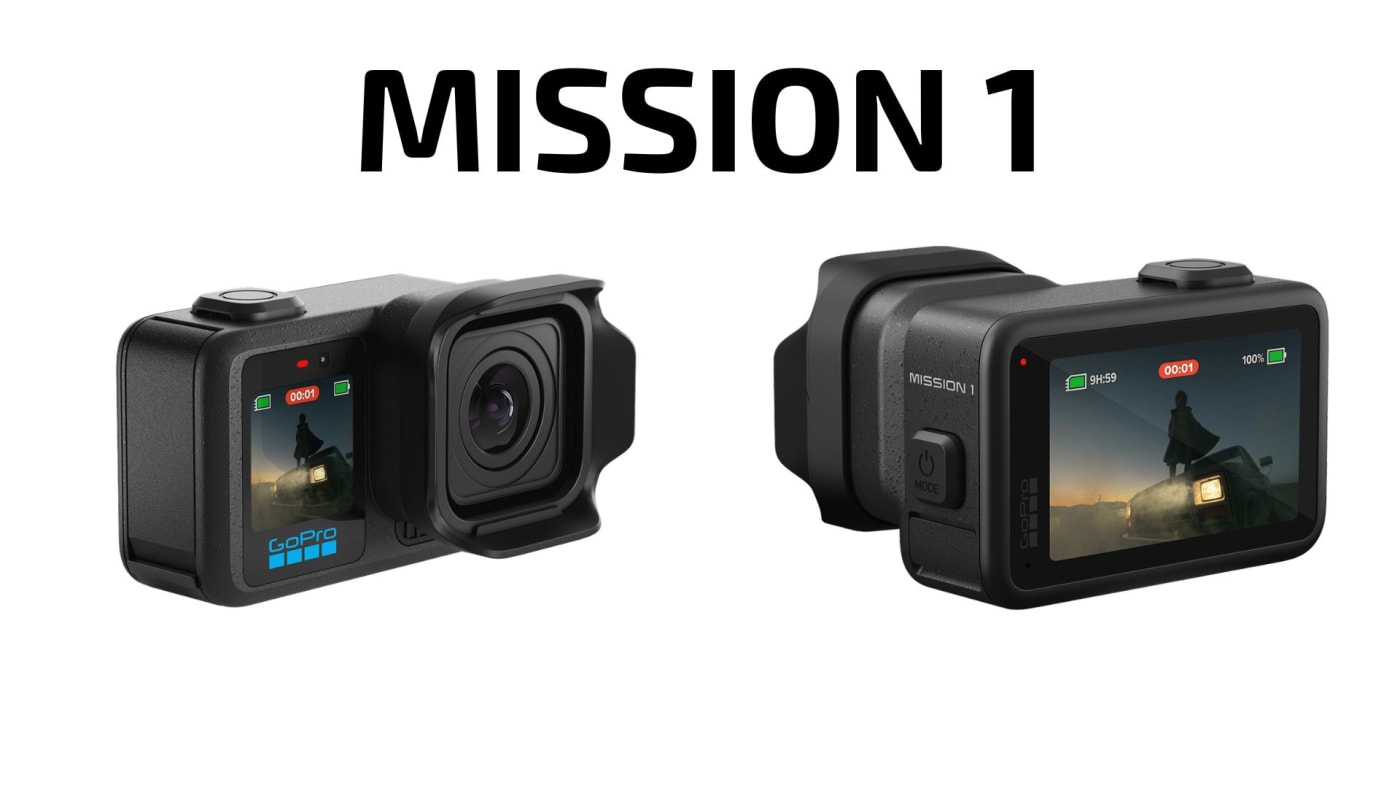
GoPro Just Changed the Game with the new Mission 1 Series: 8K/60fps, 50MP Photos, and Interchangeable MFT Lenses
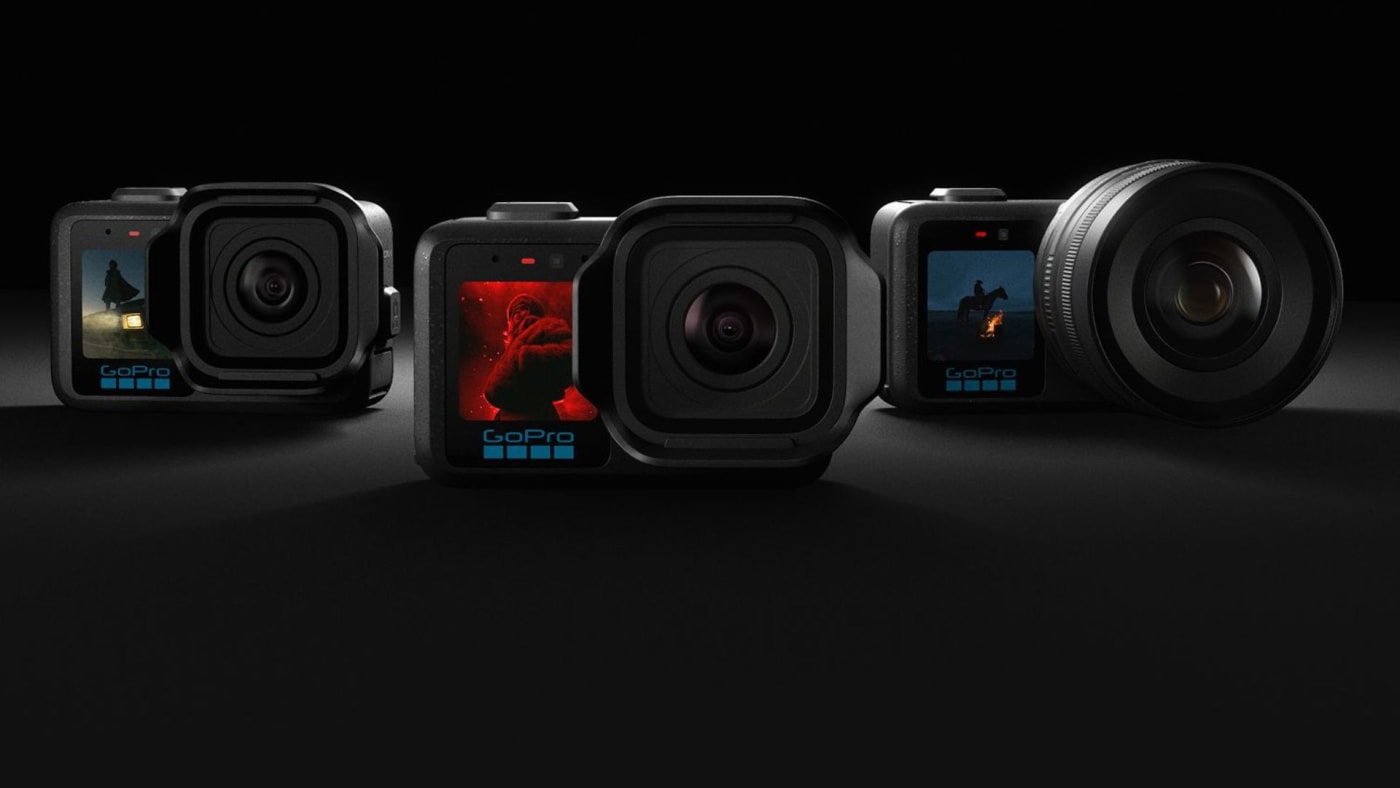
GoPro has announced the Mission 1 series: three compact cinema cameras built on a new 50MP 1-inch sensor and GP3 processor. The flagship Mission 1 Pro shoots 8K at 60fps and 4K at 240fps. The Mission 1 Pro ILS adds a Micro Four Thirds interchangeable lens mount. Here’s the full breakdown of all three tiers.
Wayne Grayson • Apr 28, 2026
For most of its existence, GoPro has owned the action camera category. But in recent years, DJI and Insta360 have been closing the gap—and in some corners of the market, pulling ahead. The new Mission 1 Series is a bold response at a crucial time for the company synonymous with action cameras.
The new Mission 1 Series doesn't replace the company's iconic Hero line. This is an entirely new tier of camera built on a 50-megapixel 1-inch sensor and GoPro’s brand-new GP3 processor. As such, these cameras are designed to compete directly with prosumer cinema tools, not just other action cams.
Here’s a full breakdown of all three tiers, what they can do, and what they mean for creators.
The Foundation: GP3 Processor and a 50MP 1-Inch Sensor
Before we get into the differences of these new Mission 1 cameras, let's talk about what they share.
Each of these new cameras is built on the same core hardware: a new 50-megapixel 4:3 Type 1 (1-inch) sensor paired with GoPro’s GP3 processor. That sensor is a significant step up from the competition. GoPro says it is 25.4% larger than the sensor in the DJI Osmo Action 6 and 43.8% larger than the one in the Insta360 Ace Pro 2.
Pixel size matters for low light performance, and the Mission 1’s numbers are compelling. At 8K resolution, GoPro says its sensor gathers 77% more light per pixel than the competition.
The GP3 processor powers the resolution and frame rates, but also handles thermal management, which matters enormously in compact cameras that tend to throttle or shut down during extended 8K recording. GoPro says GP3 delivers better thermal performance than any previous chip in the line.
Mission 1 Pro: The Flagship
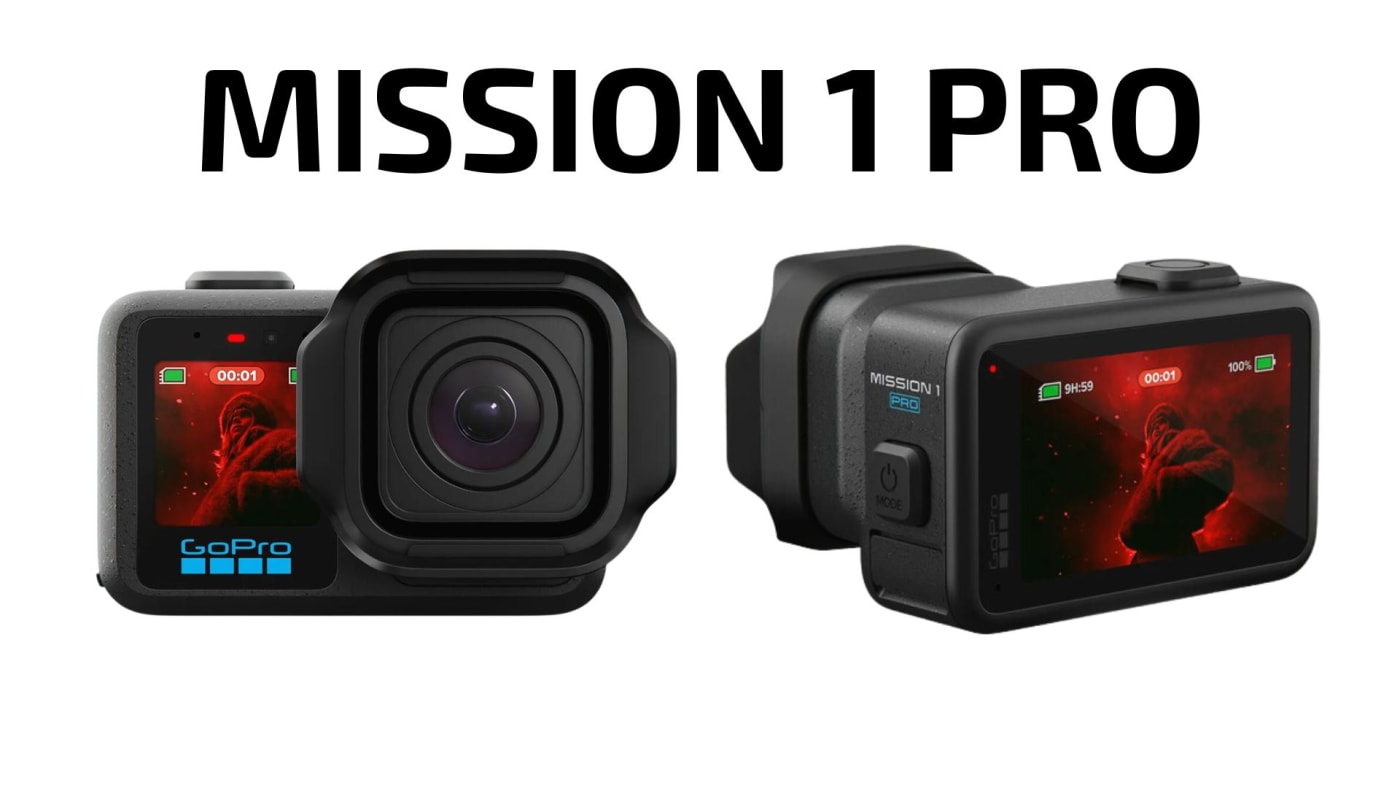
The Mission 1 Pro is the full-capability fixed-lens model. Its headline specs: 8K video at 60fps in 16:9, 8K Open Gate (4:3 at 7,680 x 5,760 pixels) at up to 30fps, 4K at 240fps, and 1080p at a staggering 960fps.
The Mission 1 Pro shoots GP-Log2, a 10-bit log profile, at up to 240 Mbps. GoPro says that bitrate was engineered to meet Netflix delivery requirements. HLG HDR capture is also supported and the camera boasts up to 14 stops of dynamic range at the sensor. For photographers, the GP3 processor enables 50MP RAW still captures with full manual control over ISO, shutter speed, exposure compensation, and white balance.
On the professional workflow side, the Mission 1 Pro adds timecode sync support—useful for multi-camera setups—and real-time readouts of white balance, EV, ISO, and shutter.
For audio, the camera has four built-in microphones and supports external mics via USB-C. GoPro has also implemented 32-bit float audio recording.
The Mission 1 Pro is waterproof to 66 feet (196 feet with the dive case) without a housing, features a 2.59-inch OLED rear screen paired with a 1.4-inch front screen, raised buttons for gloved operation, a hydrophobic front element coating, and a removable lens hood. It does not have built-in storage; it uses microSD cards.
Mission 1 Pro ILS: The Interchangeable Lens Model
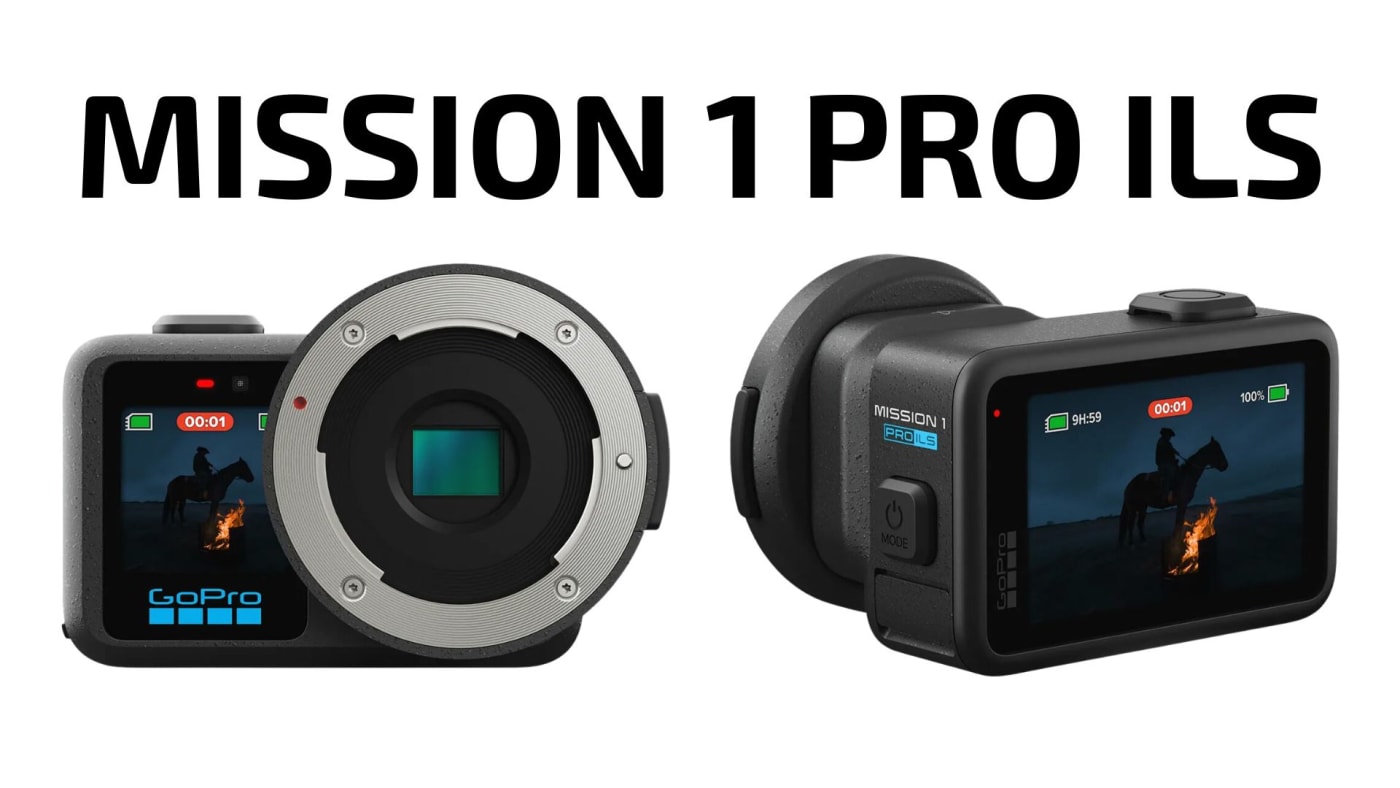
The Mission 1 Pro ILS is the most unusual camera in the lineup and the most significant. It carries the same 50MP 1-inch sensor and GP3 processor as the Mission 1 Pro, but replaces the fixed lens with a Micro Four Thirds (MFT) lens mount.
This opens up a massive existing ecosystem of MFT lenses from Olympus, Panasonic, and other manufacturers, plus a wide range of adapted glass via MFT adapters. GoPro has even confirmed that anamorphic lenses are supported which is going to enable a whole lot of fun new ways to shoot. HyperSmooth stabilization works in-camera with any rectilinear prime focal length lens.
The crop factor math is worth taking a look at. With a 1-inch sensor behind an MFT mount, you’re looking at approximately a 2.7–3x crop factor relative to full frame. In practice: a 25mm MFT prime behaves like roughly a 75mm equivalent. A wide 7-14mm zoom becomes more like a 21-42mm. Telephoto, macro, and specialty glass get particularly interesting at this crop factor.
One important note: the Mission 1 Pro ILS is manual focus only. The mount has no electronic contact pins, so autofocus and electronic aperture control are not available with MFT glass. This camera is built for setups where you know your working distance: crash rigs, drone payloads, underwater housings, gimbal arms, and macro work. For run-and-gun documentary or event shooting, the fixed-lens Mission 1 Pro is likely the better fit.
Because of the exposed lens mount, the ILS model is weatherproof rather than waterproof to the same depth as the fixed-lens models. For underwater work, you’ll need a dedicated housing.
Despite those caveats, the Mission 1 Pro ILS represents completely new territory for both GoPro and the action camera category. The ability to mount telephoto, anamorphic, or macro glass on a weather-resistant, stabilized, 8K-capable body this size doesn’t really exist elsewhere at this price point. We're really looking at a new class of cine cam here.
Mission 1: The Entry Point
The base Mission 1 shares the same 50MP 1-inch sensor and GP3 processor as the Pro models, but with a reduced maximum video spec: 8K at 30fps (not 60fps), 4K Open Gate at up to 120fps, and slow motion at 4K/120fps and 1080p/240fps.
For a lot of creators—especially those who don’t need 4K/240fps slow motion or 8K at 60fps —this represents exceptional value. You get the same sensor, the same low-light capability, the same log profile and RAW photo capability, for $100 less than the Pro.
Battery Life: Up to Five Hours
GoPro’s new Enduro 2 battery has 13% more capacity than the previous Enduro giving the Mission 1 Pro camera a maximum rated life of five hours when recording 1080p at 24, 25, or 30fps. GoPro says that maximum can be reached regardless of airflow, which is a notable claim for a compact camera.
At more demanding resolutions and frame rates, that number comes down. In 4K at standard frame rates, the Mission 1 Pro is rated at 188 minutes. At 4K/120fps, expect around 101 minutes. At 4K/240fps, airflow matters: 74 minutes with proper airflow, dropping to 35 minutes in a confined, no-airflow position. At 8K Open Gate, the rating is 96 minutes in standard frame rates, 74 minutes at 8K/60fps with airflow, or 37 minutes without.
Intelligent Capture Modes
The Mission 1 Pro cameras support a comprehensive suite of intelligent capture modes: subject tracking, Dive mode (tuned for underwater stabilization and exposure), and Low Light mode (brightness enhancement with noise reduction).
Standard modes include Video, Slow Motion, Photo, Timelapse, Sport POV, Vlog, Open Gate, Endurance, and Looping.
Workflow Opportunities
The Mission 1 Pro’s 10-bit GP-Log2 color profile and 240 Mbps maximum bitrate put it in professional post-production territory. Footage will integrate cleanly into DaVinci Resolve, Premiere Pro, or Final Cut Pro workflows, and the timecode sync support makes it viable as a B-camera alongside larger cinema rigs.
The 32-bit float audio recording is a nice pro upgrade as well. Combined with the four on-board microphones and USB-C external mic support, the Mission 1 Pro can serve as a clean single-operator recording package for interviews, documentary work, and event coverage in a pinch.
For the Mission 1 Pro ILS, the workflow opportunities expand dramatically depending on the glass you mount. Anamorphic shooters can get that wide-format cinematic look in a body that fits in a jacket pocket. Macro photographers can capture detail that would require a dedicated macro rig on any other action camera. Cinematographers who already own MFT glass for a Panasonic GH7 or Olympus body can bring that optical investment to bear on a rugged, stabilized, 8K platform.
One workflow consideration worth planning around: the Mission 1 series does not have built-in storage. It uses microSD cards, and at 240 Mbps in the Pro’s highest-bitrate mode, you’ll want fast, high-capacity media and a reliable offload strategy.
At 8K/60fps over a full shooting day, you can generate significant data volumes quickly. Pairing a fast, rugged, portable SSD like the OWC Envoy Ultra or Envoy Pro Elektron with one of these new GoPro Mission 1 cameras ensures that footage offload happens quickly, allowing you to getting back to what matters: capturing more incredible moments.
Key Specs
All Mission 1 Models (Shared):
- Sensor: 50MP Type 1 (1-inch) CMOS, 4:3 aspect ratio
- Processor: GoPro GP3
- Photos: 50MP RAW with full manual control (ISO, shutter, EV, WB)
- Color: 10-bit GP-Log2; HLG HDR
- Audio: 4 built-in microphones; 32-bit float recording; external mic via USB-C; Bluetooth 5.3
- Screen: 2.59-inch OLED rear; 1.4-inch front display
- Storage: microSD (no built-in storage)
- Waterproofing: 20m (66ft) without housing; 60m (196ft) with dive case (fixed-lens models)
- Battery: Enduro 2 (13% higher capacity than prior Enduro)
Mission 1 Pro (Flagship):
- Video (16:9): 8K/60fps, 4K/240fps, 1080p/960fps
- Video (Open Gate 4:3): 8K/30fps, 4K/120fps
- Max Bitrate: 240 Mbps
- Slow Motion: Up to 960fps at 1080p; 240fps at 4K
- Lens: Fixed (with removable lens hood; hydrophobic coating)
- Battery Life: Up to 5 hours (1080p/30); approx. 74 min at 8K/60fps (with airflow)
Mission 1 Pro ILS:
- Same sensor, GP3 processor, and video specs as Mission 1 Pro
- Lens Mount: Micro Four Thirds (MFT); compatible with MFT lenses and adapters
- Anamorphic lens support: Yes
- Focus: Manual only (no electronic contact pins)
- HyperSmooth: Available with rectilinear prime lenses
- Waterproofing: Weatherproof (not waterproof to 20m like fixed-lens models)
- Availability: Q3 2026
Mission 1 (Base Model):
- Video (16:9): 8K/30fps, 4K/120fps, 1080p/240fps
- Video (Open Gate 4:3): 4K/120fps
- Same sensor, GP3, GP-Log2, and RAW photo capability as Mission 1 Pro
Pricing and Availability
GoPro held back pricing at the initial April 14 announcement, citing uncertainty in flash memory markets. Since then pricing has been confirmed:
Mission 1: $599 MSRP; $499 for existing GoPro subscribers
Mission 1 Pro: $699 MSRP; $599 for existing GoPro subscribers
Mission 1 Pro ILS:
$699.99 MSRP; $599.99 for subscribers (Q3 2026)
The Mission 1 and Mission 1 Pro are available for pre-order now, (B&H link) with global on-shelf availability starting May 28, 2026. Pre-orders placed at GoPro.com include the new Point-and-Shoot Grip for free while supplies last.
It’s also worth noting that the Mission 1 Pro’s pricing puts it in competition with serious interchangeable-lens video cameras, including the Canon EOS R50V and Nikon Z30, both of which GoPro is clearly aiming at with this launch.
Other topics you might like

Godox's C100 is a Novel Light Meter and Mini Camera With a Transparent Display
Updated on Aug 5, 2026
Peak Design's Field Bracket is a Modular, AirTagged Evolution of the L-Bracket
Updated on Jul 28, 2026
Sony’s New FX5 Brings New Sensor, Open Gate, VENICE-level Features to a Compact Cinema Camera
Updated on Jul 23, 2026