 USA + International
 OWC Canda
 OWC Europe
CFexpress Explained: Type A vs. Type B — What’s the Difference?
There are some pretty major performance differences between the two major types of CFexpress memory cards.
Wayne Grayson • Aug 04, 2026
If you’re researching the purchase of a new camera body, one of the key features you want to consider is memory card support. Maybe you’re coming from a camera that only supported SD cards and are researching CFexpress cards for the first time. Or maybe you’ve always shot Sony cameras with CFexpress Type A cards and are curious about switching to a camera that offers CFexpress Type B support.
Regardless of your current situation, understanding the capabilities and differences between CFexpress memory card types is vital to ensuring you’re getting the most your camera is capable of. That’s because CFexpress memory cards offer as much as 10x the speed of SD cards, thus unlocking the ability to shoot in more demanding codecs, resolutions, and frame rates on your camera. But all that extra speed also comes into play when you’re offloading your cards, turning ingest sessions that used to take hours into ones that take less than 10 minutes.
So, let’s talk CFexpress cards. Below we’ll get into which cameras use which types, differences in performance, and differences in cost.
Camera Support: Sony Goes it Alone
When it comes to camera support for CFexpress Type A and Type B cards, it’s very simple to remember which cameras support which type. There’s Sony and CFexpress Type A and Literally Everyone Else and CFexpress Type B.
Sony bodies with CFexpress Type A include the a9, a1, a7S III, a7 IV, a7 V, a7R V, FX3, FX5, FX6, FR7, and FX30. If you shoot Sony and want to shoot to a CFexpress card, your only option is Type A.
CFexpress Type B, on the other hand, is used by everyone else offering CFexpress support in their bodies: Canon (EOS R3, R5, R1, and the broader R-series), Nikon (Z6, Z7, Z8, Z9), Panasonic, Fujifilm (GFX and X-H series), and RED’s cinema cameras including the V-Raptor and Komodo.
What’s interesting is that it didn’t have to be this way. CFexpress is an open industry standard. That means that any manufacturer can join the CompactFlash Association (CFA) and make CFexpress cards or support them in their camera bodies. So when the CFA released the blueprints for the Type A, Type B, and Type C card standards in 2019, it was likely assumed many camera makers would support both Type A and Type B (Type C is the largest and fastest format and is used for instead for computer storage.)
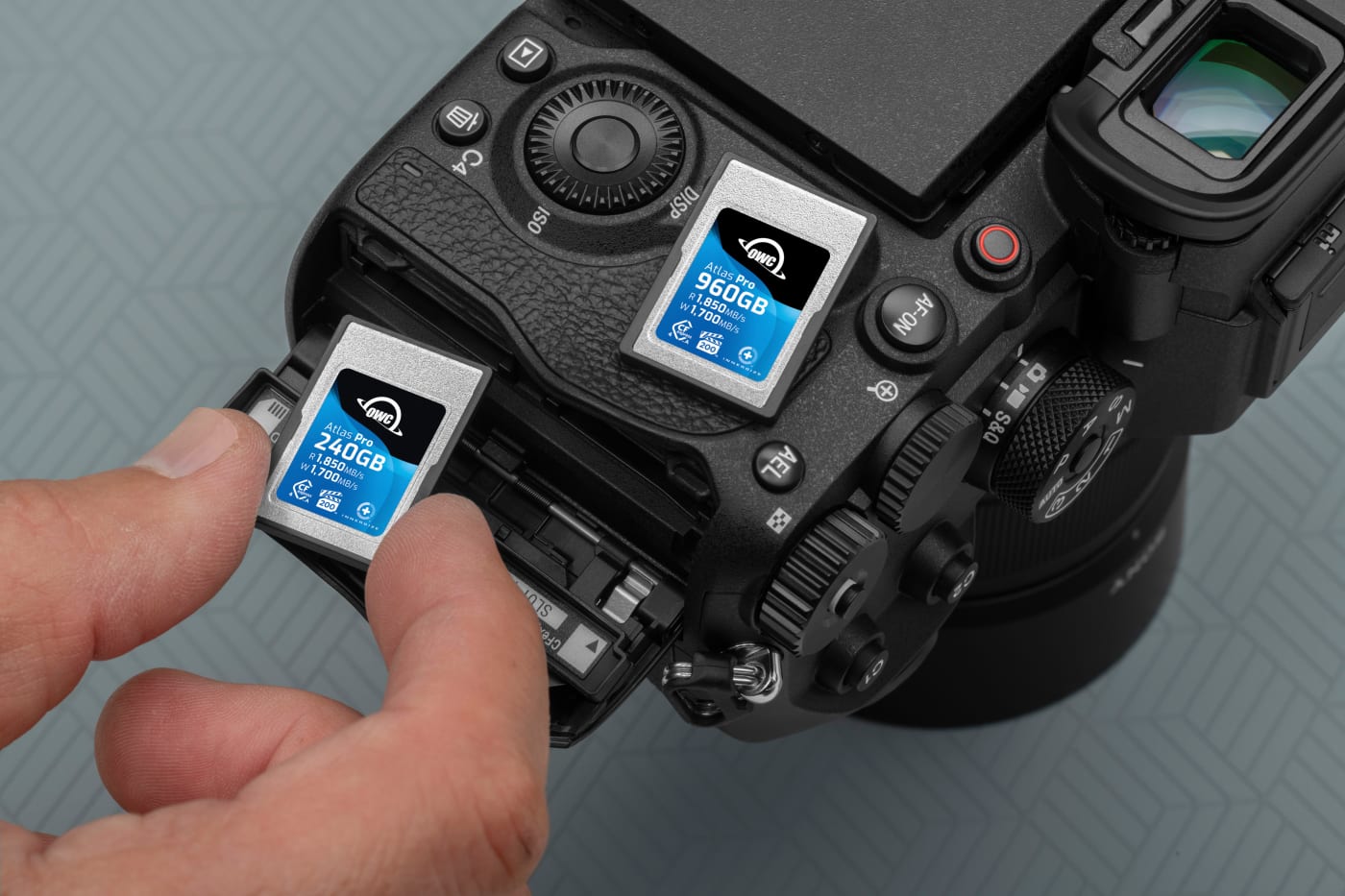
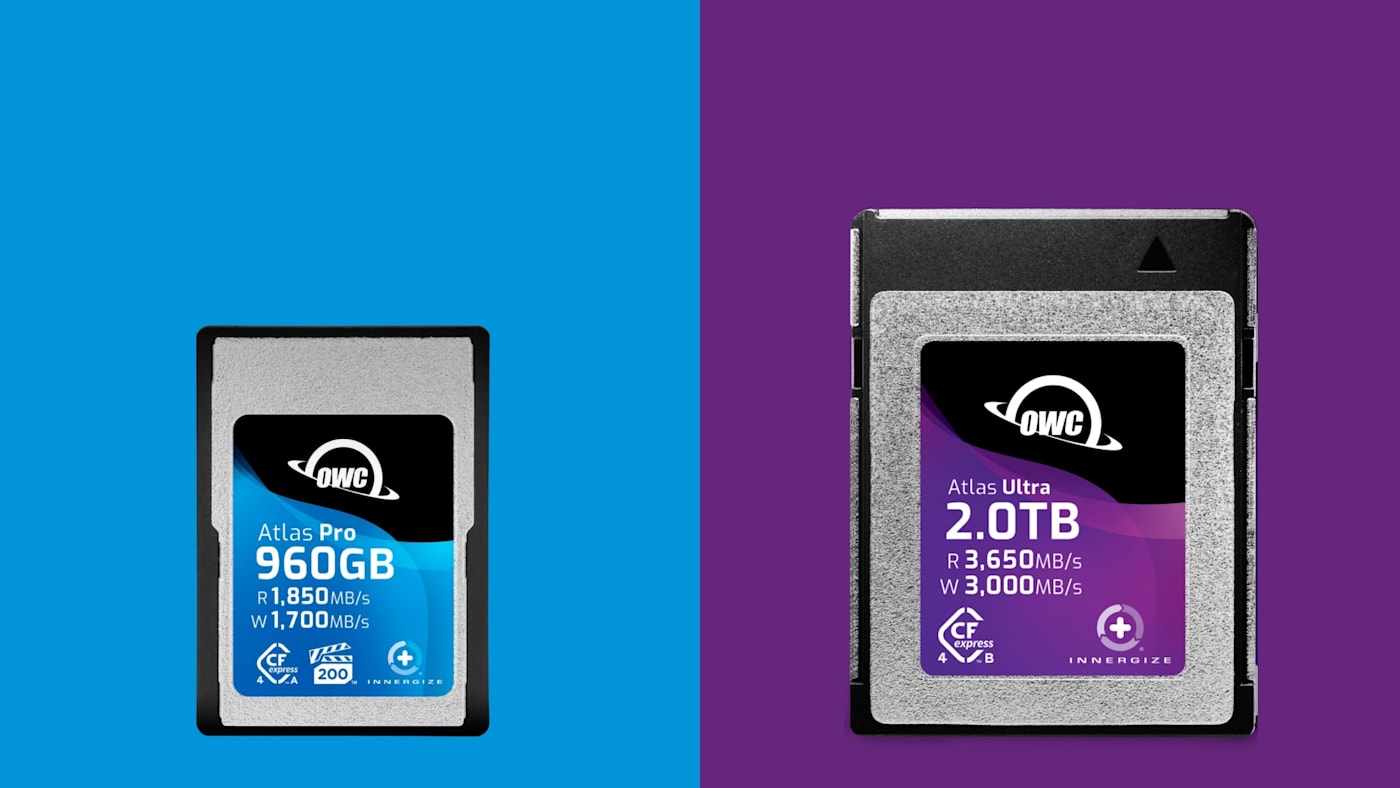
Type A cards measure roughly 20 by 28mm while Type B cards are considerably larger, at roughly 38.5 by 30mm. So, cameras prioritizing small size could adopt CFexpress Type A while those prioritizing higher speeds could opt for Type B.
And that’s sort of what happened. Sony became the first to manufacture CFexpress Type A cards in support of the A7 SIII in 2020. Sony preferred Type A because it was smaller than the Type B card while still being much faster than SD cards. Sony preferred that smaller form factor because it allowed them to create hybrid camera slots that accept both SD cards and CFexpress Type A.
Every other camera maker then made the opposite decision, choosing the much higher speeds of Type B over Type A’s small size. And that’s how things have remained ever since.
The Performance Difference
So, why is Type B so much faster than Type A? Well, with the extra size, Type B cards can support two PCIe lanes compared to Type A’s single lane. Plus, the larger size makes Type B cards a much better heat sink, giving them better thermal management than Type A cards.
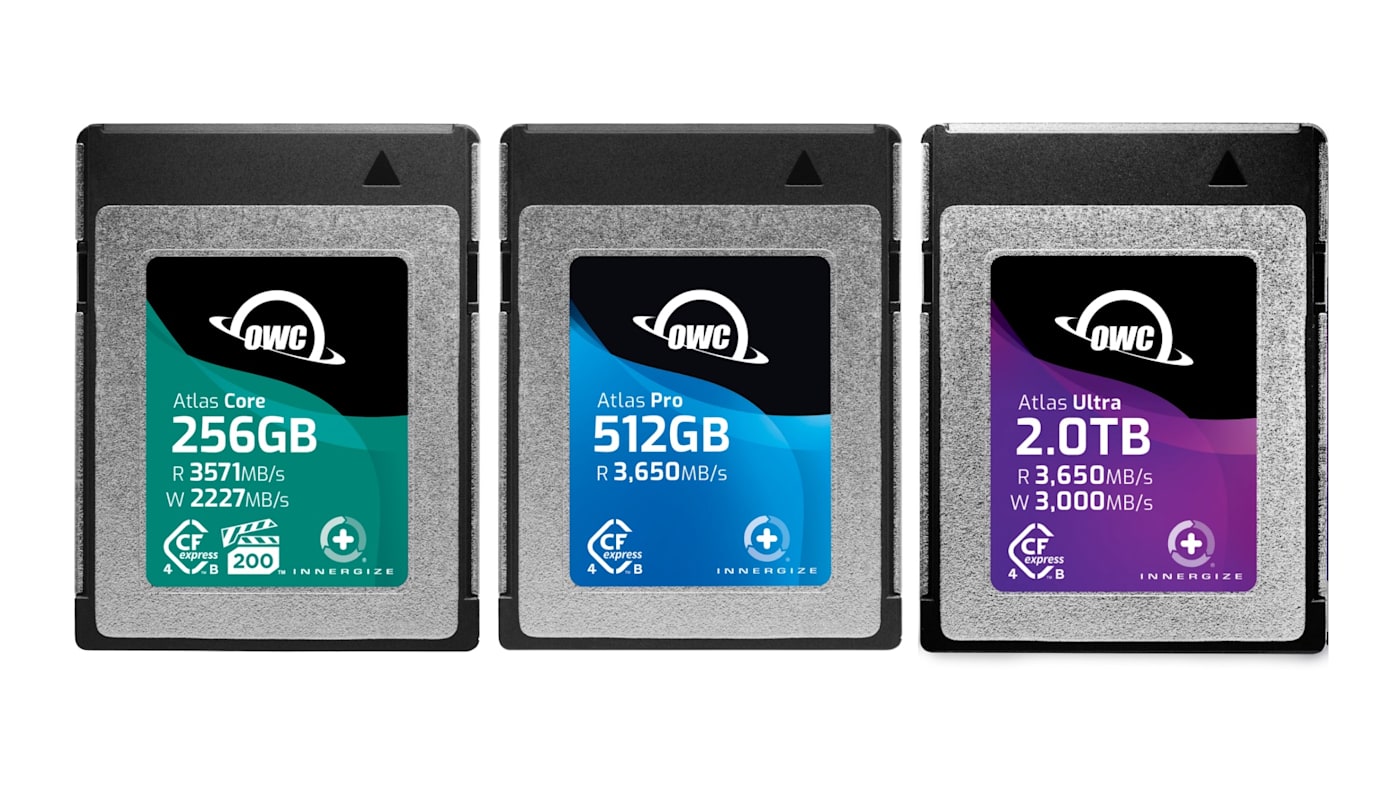
Because Type B uses twice the PCIe lanes of Type A, its bandwidth ceiling is much higher. The OWC Atlas Pro CFexpress Type A card is on the latest 4.0 specification, delivering top speeds up to 1,850MB/s read and 1,700MB/s write. Type A cards also offer impressive sustained performance with some cards reaching sustained speeds as high as 800MB/s. That type of sustained performance is on par with Type B cards like our mid-tier Type B card, the OWC Atlas Pro. However, the Atlas Pro Type B delivers double the max read and write speeds at 3,650MB/s and 3,000MB/s, respectively.
But here's where the real separation between Type A and Type B cards comes into play. Our OWC Atlas Ultra CFexpress 4.0 Type B is our fastest Type B card, delivering the same 3,650MB/s read and 3,000MB/s write capability of the Atlas Pro , but doubling sustained write performance to 1,500MB/s.
That difference in sustained performance is absolutely crucial for a lot of professional video workflows involving 8K RAW capture, high-frame rate slow motion shots, or long recording sessions where thermal management absolutely cannot fail. The Atlas Ultra is a tier of card built specifically for demanding cinema workflows and camera systems like the RED V-Raptor that require guaranteed sustained throughput, not just a high peak number.
Type B’s larger size also allows manufacturers to cram more capacity into Type B cards. While Type B cards can reach as high as 4TB in capacity, Type A cards top out around 1TB.
So, when it comes to CFexpress cards, size really matters. The trickle down effects of Type B’s larger size explain pretty well why no one has joined Sony in offering Type A support. Type B is a much more flexible card when it comes to bandwidth.
Summing Up the Differences
Every difference between the two formats traces back to the same root cause: Type A uses one PCIe lane in a smaller shell, Type B uses two in a larger one. That single design choice cascades into everything else that separates them.
- Size and camera fit: Type A is compact enough to share a slot design with SD, which is why Sony built its hybrid dual-slot bodies around it. Type B is larger and faster, which is why nearly every other manufacturer building around CFexpress uses it instead.
- Speed ceiling: Type B’s second PCIe lane gives it meaningfully higher maximum and sustained speeds than Type A, which is why cinema-oriented cameras and the highest-end sustained recording workflows have gravitated toward it.
- Capacities: Because of the larger sizes and higher bandwidth, Type B cards support up to 4x the capacity of the highest capacity Type A cards.
No matter which camera you choose or CFexpress card you need, we’ve got you covered here at OWC. Check out our full line of Atlas CFexpress memory cards and readers here
Other topics you might like

OWC SoftRAID 9 Brings RAID 6 Protection to Mac and Windows, Introduces RAID 6+
Updated on Sep 21, 2026

How to Maximize Your New M5 Max and M5 Ultra Mac Studio: Storage, Docking, and Connectivity
Updated on Sep 16, 2026


Get the Most Out of the New M6 and M5 Pro Mac mini with These Docks and Drives
Updated on Sep 3, 2026